
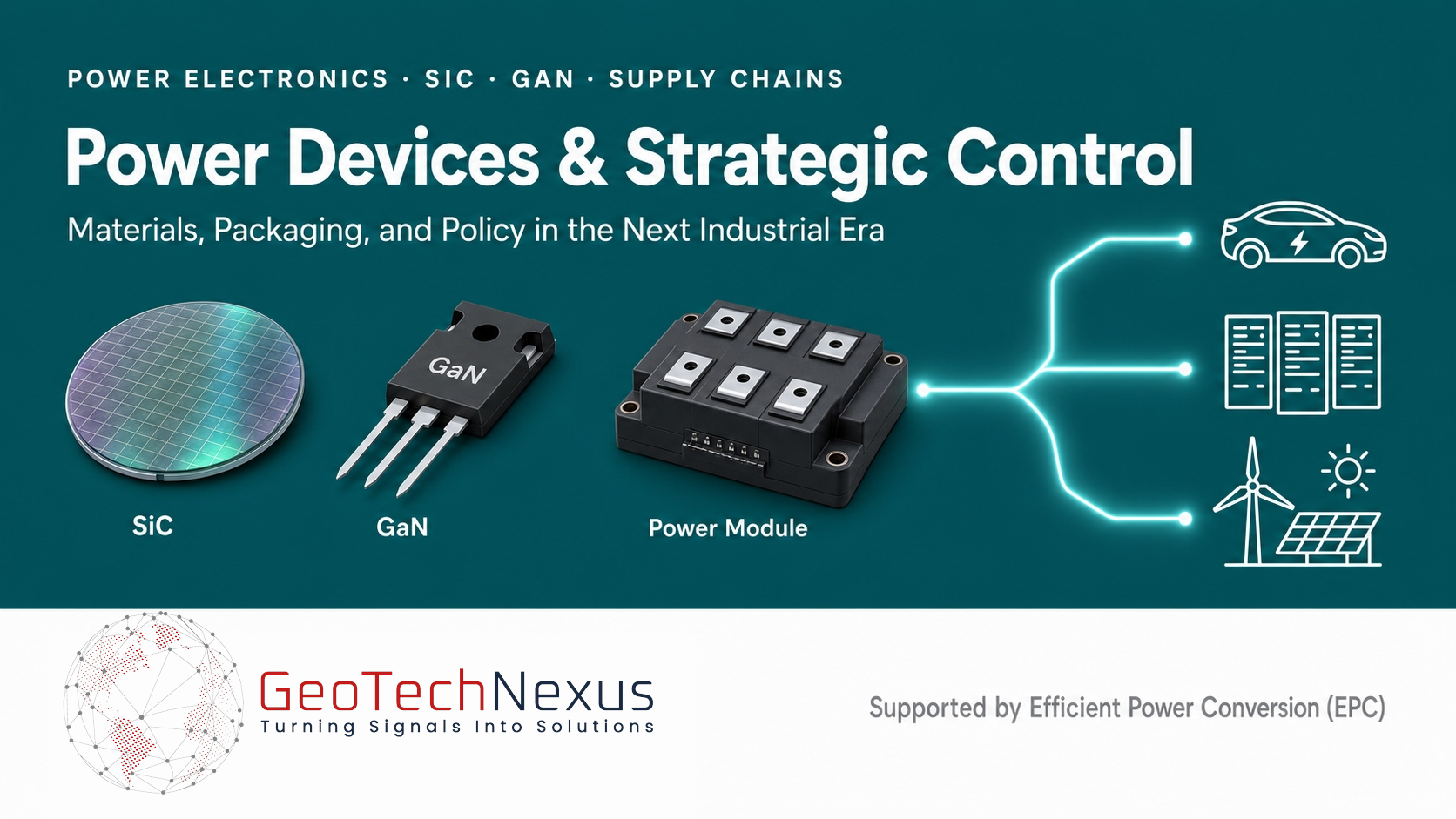
Power Electronics —Devices, Materials, and StrategicControl
Power electronics have quietly shifted from background utility to strategic control layer in the high‑tech economy, determining how fast, how efficiently, and where electrified growth can truly scale. As SiC and GaN devices spread from EV inverters to data centers and renewable systems, control over materials, substrates, packaging, and export policy is becoming as consequential as control over compute. This report explains how upstream refining, substrate capacity, packaging, and qualification have turned power semiconductors into geopolitical chokepoints – and why the next industrial era will be shaped by the countries and firms that can coordinate this full stack
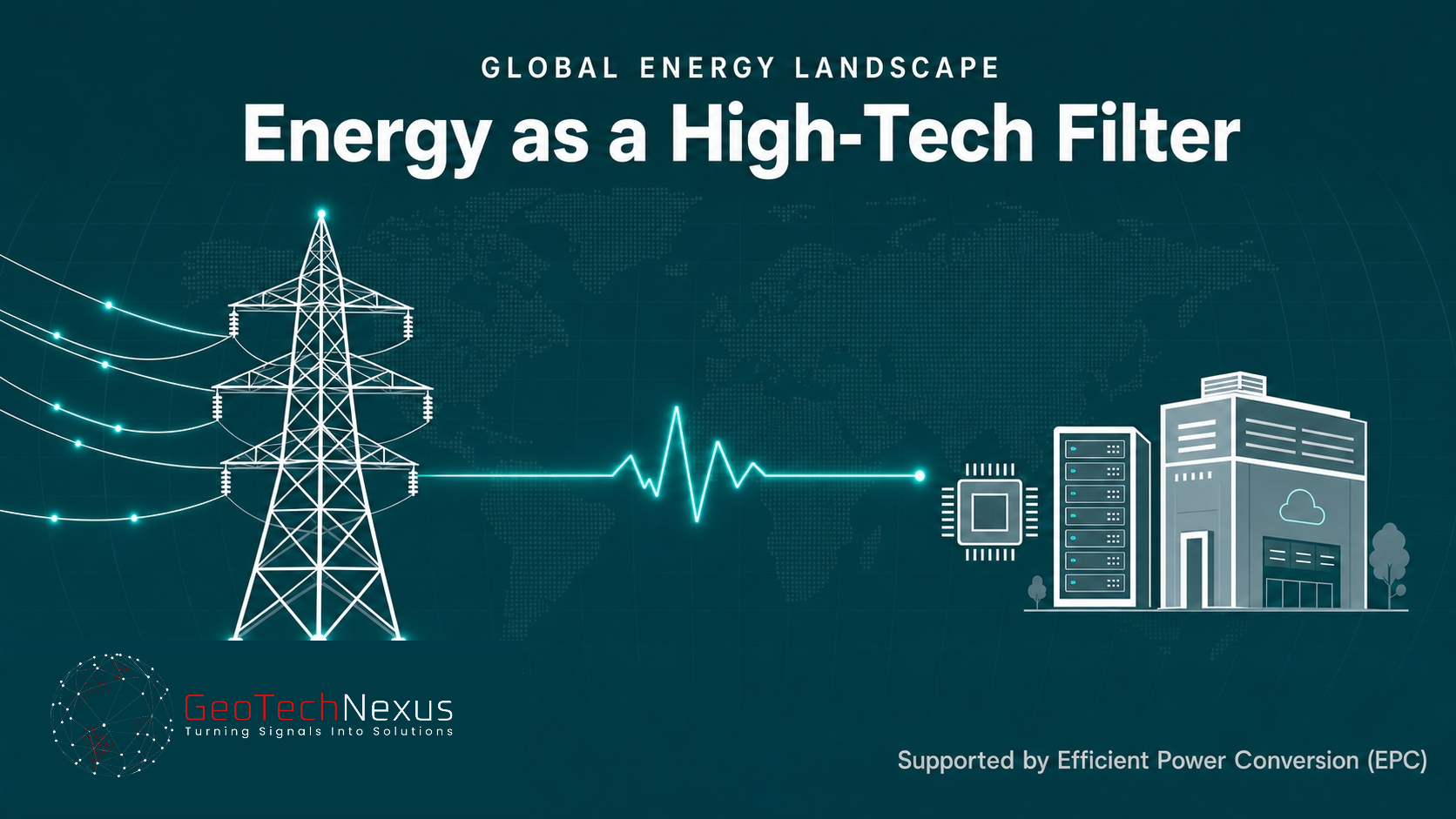
The Global Energy Landscape and High-Tech
Electricity has become the competitive core of the high‑tech economy, redefining where nations can credibly host fabs, AI data centers, and advanced manufacturing at scale. This GeoTechNexus report maps how generation portfolios, grid strength, and energy pricing now function as strategic filters that separate winners from laggards in the global technology hierarchy. Focusing on the U.S., China, the EU, India, and the Gulf states, it shows why installed capacity is no longer enough – only affordable, scalable, and politically durable power qualifies as usable industrial power. The analysis explains how weak grids can nullify strong industrial policies, why volatility can be as damaging as
EPC: The GaN Disruptor
Technology pioneer, geopolitical asset and strategic scaling candidate — refreshed after primary research with EPC CEO Alex Lidow at PCIM Europe 2026 Efficient Power Conversion Corporation (EPC) is one of the companies that turned enhancement-mode gallium nitride (eGaN) from an engineering proposition into a commercial power-device platform. Founded in 2007 by Alex Lidow — co-inventor of the silicon power MOSFET and former CEO of International Rectifier — EPC shipped the first commercial eGaN transistors in 2009 and has since built a focused portfolio of GaN power devices, integrated circuits, automotive-qualified parts and radiation-hardened products for space and defense. This Version 3.0 SGI™ Research Report

Part II — Why Energy Now Sits at the Centre of the High-Tech Economy.
For most of the digital era, energy was treated as a cost line and a politically neutral input. That assumption has broken down. Semiconductor fabs, AI clusters, hyperscale data centres and telecom networks now sit on top of stressed grids, contested supply chains, and strategic materials flows that are no

Energy at the Core
A new GeoTechNexus research series on power, energy, and the high-tech economy. Electricity availability, grid reliability, power management and access to critical materials have become strategic variables — reshaping where fabs are built, where AI clusters cluster, and which nations get to lead. Subsidies, export controls, friend-shoring and mineral restrictions
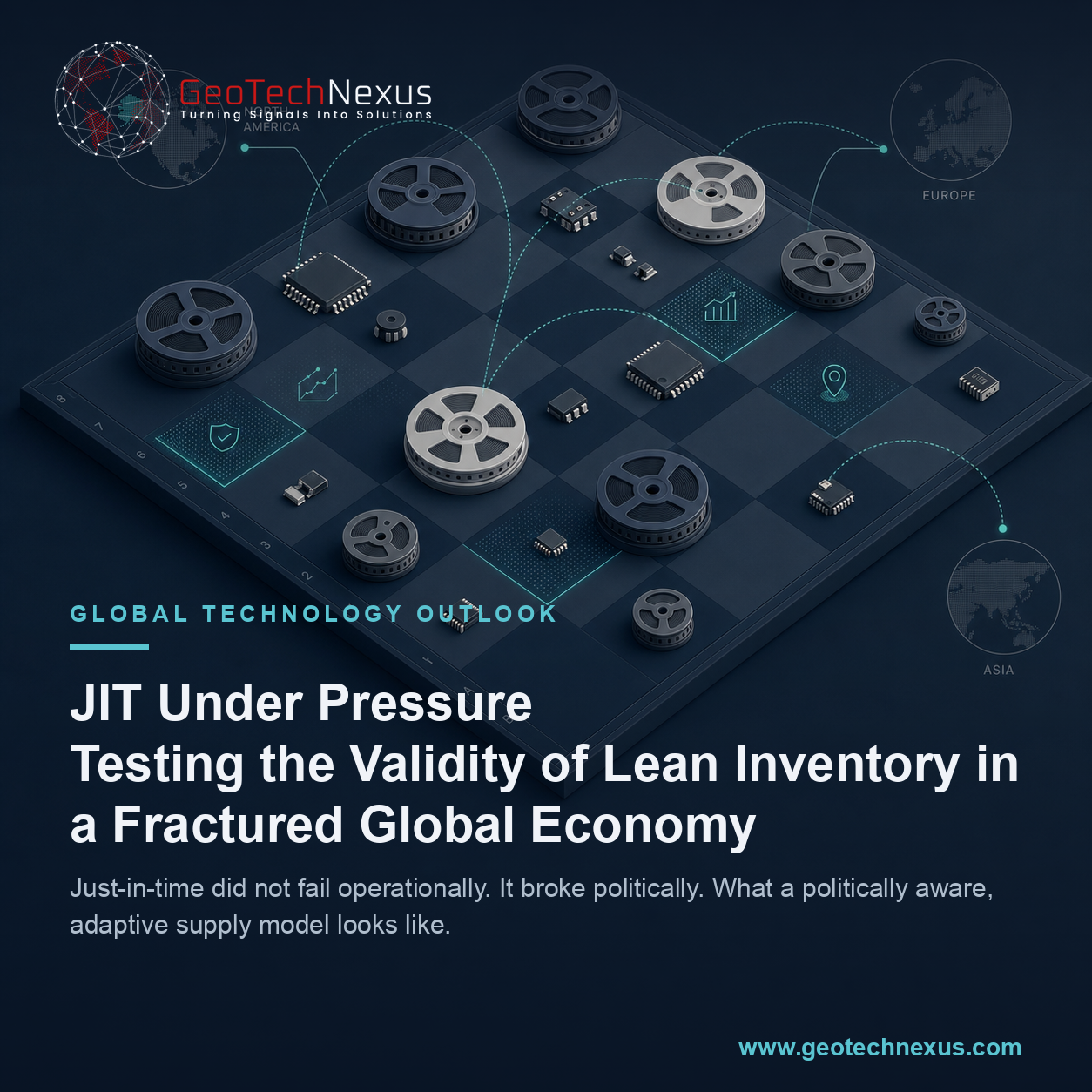
JIT Under Pressure: Testing the Validity of Lean Inventory in a Fractured Global Economy
For three decades, just-in-time defined the electronics supply chain — lean inventory, compressed lead times, and a single, frictionless global flow of components. That model is now breaking. But it isn’t breaking the way most analysts assume. JIT didn’t fail operationally; it failed politically. Export controls, sanctions regimes, economic nationalism,
JIT at the Edge: Why Electronic Component Distributors Can No Longer Live on Speed
The electronic component distribution sector built its business model on the logic of just-in-time: compressing lead times, smoothing procurement, and moving parts through an integrated, politically permissive global trading system. That environment has changed decisively. Geopolitical fragmentation, economic nationalism, export controls, sanctions regimes, and regional policy divergence are dismantling the