The global technology sector faces an uncomfortable reality: the components that power everything from smartphones and semiconductors to fighter jets and electric vehicles are overwhelmingly controlled by one nation. China’s grip on rare earth minerals — long considered a latent geopolitical risk — has become an active and increasingly codified instrument of state power.
What Are Rare Earths and Why Do They Matter?
Rare earth elements (REEs) are a group of 17 chemically similar minerals that sit at the very heart of modern high-tech manufacturing. Despite their name, most are not particularly scarce in nature — they are considered “rare” because of the difficulty involved in extracting them in commercially viable, pure form. The products they enable, however, are anything but niche. Neodymium is used in the powerful permanent magnets found in electric vehicle motors, wind turbines, and jet engines; dysprosium and terbium enhance those magnets’ ability to withstand high temperatures; and yttrium is critical in the manufacture of semiconductors, phosphors, and advanced ceramics
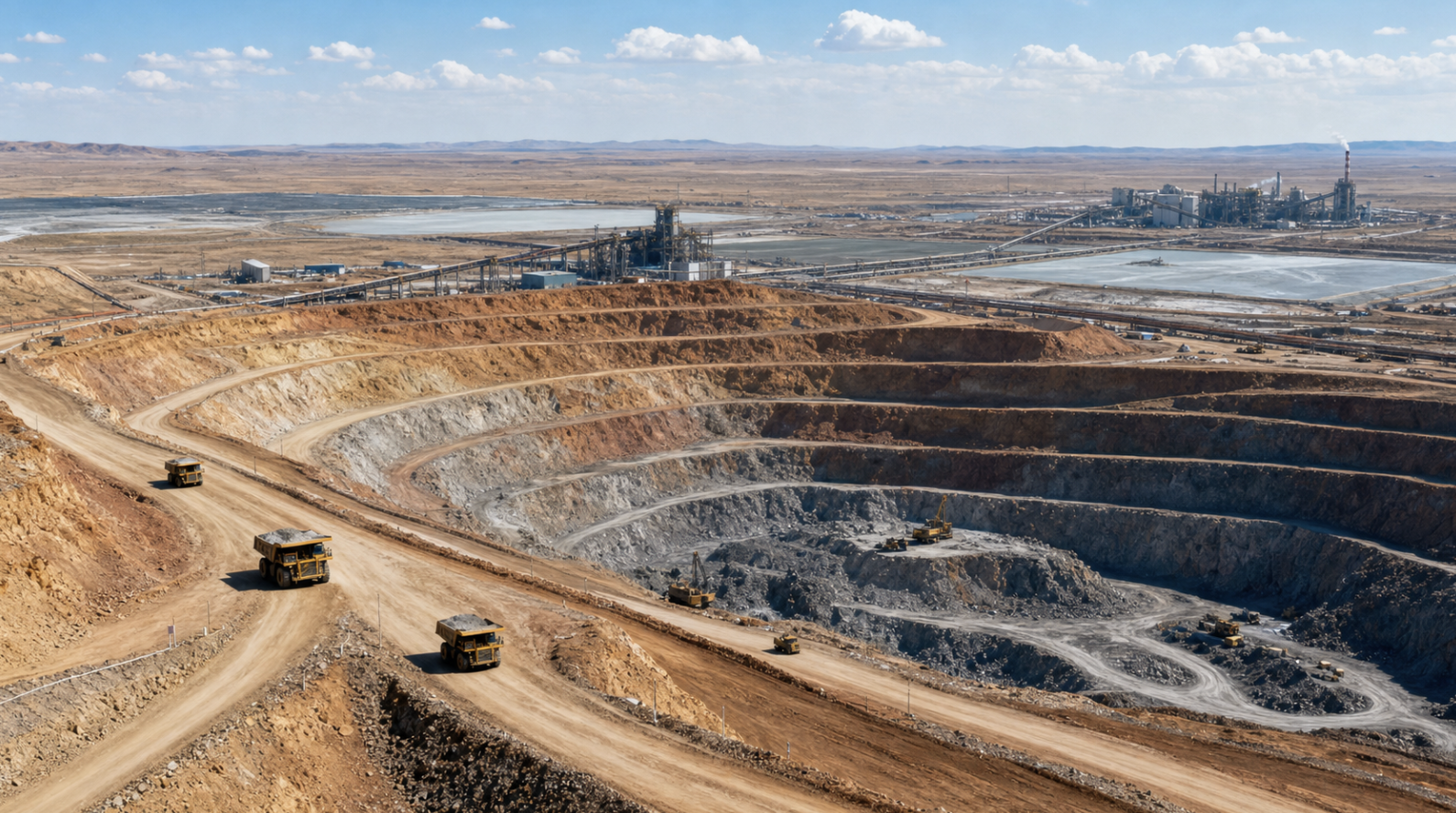
The challenge for Western nations is not simply one of access to the raw material in the ground — it is one of processing dependency. China currently accounts for approximately 61% of global rare earth mine output and a staggering 92% of all refining and processing. That extraordinary concentration means Beijing can effectively dictate the terms on which the rest of the world manufactures its most advanced technologies.
Tightening the Screws: Beijing’s Enforcement Crackdown
In late April 2026, China’s Ministry of Industry and Information Technology (MIIT) published a landmark draft enforcement framework that signals a fundamental shift from broad industrial policy to hard, codified control. The document sets out a graduated system of administrative penalties for Chinese rare earth producers who breach production quotas or engage in unauthorised separation activities.
The penalties are strikingly severe. A company that produces more than 10% above its allocated quota faces fines of up to five times its “illegal gains”. For producers that exceed quotas by more than 30%, business licences may be revoked entirely, and both the illegally produced materials and the equipment used to manufacture them can be confiscated by the state. Crucially, companies are also now required to accurately record and upload all product flow data to a government traceability system — formalising Beijing’s ambition for what MIIT itself describes as “total control” of the sector. Public comment on the framework closes on 28th May 2026.
This latest enforcement push builds on two successive waves of export restrictions introduced in April and October 2025, during which China added seven key rare earth minerals — including samarium, gadolinium, and lutetium — to its export control list. The April 2025 restrictions alone triggered a significant global shortage, sending alarm signals through automotive, defence, and semiconductor supply chains worldwide.
A Strategic Weapon in Trade Negotiations
China has been explicit, at least implicitly, that rare earth restrictions are not merely economic housekeeping — they are a diplomatic lever. Beijing’s initial export controls in April 2025 were introduced in direct response to US tariff escalations under the Trump administration. By restricting the flow of minerals that Western manufacturers cannot easily replace, China transforms supply chain dependency into negotiating power.
This dynamic was on clear display at this week’s Trump–Xi summit in Beijing, where rare earth access formed one of the central flashpoints in trade discussions. The US finds itself in an awkward position: it possesses meaningful rare earth mining capacity domestically, particularly in states such as California and Wyoming, but critically lacks the refining and processing infrastructure to convert that raw material into usable compounds. In short, America can dig the minerals out of the ground — but it cannot yet process them at scale without Chinese technology.
The Downstream Impact: Semiconductors, Defence, and Electric Vehicles
The consequences of restricted rare earth supply radiate across three of the most strategically important sectors in the global economy.
Semiconductors depend on rare earths including yttrium and cerium for polishing compounds used in wafer fabrication, as well as in the manufacture of specialist ceramics and phosphor layers. Any sustained reduction in supply creates bottlenecks at the very foundation of chip production — with knock-on effects throughout the entire electronics ecosystem.
Defence electronics are perhaps the most acutely vulnerable. Rare earth permanent magnets are essential components in precision-guided munitions, radar systems, electric motors for naval vessels, and the actuators used in advanced fighter aircraft such as the F-35. The US and its NATO allies have no credible short-term substitute supply chain, leaving Western defence programmes exposed in a way that military planners find deeply uncomfortable.
Electric vehicles present a longer-term but equally pressing challenge. EV motors drove over 830,000 tonnes of rare earth demand in 2024 alone, a figure expected to continue rising sharply. Neodymium-iron-boron (NdFeB) magnets — the workhorse of EV drivetrains and direct-drive wind turbines — rely directly on neodymium and dysprosium, both of which sit at the centre of China’s export control lists.
Can the West Reduce Its Dependency?
The honest answer is: not quickly, and not easily. Diversifying away from Chinese rare earth dominance requires investment not just in mining — where alternative deposits exist in Australia, Greenland, Canada, and parts of Africa — but in the enormously complex and capital-intensive processing infrastructure that transforms ore into usable compound.
Some progress is being made. In the United Kingdom, Merseyside-based Less Common Metals (LCM) has emerged as one of the very few Western producers of rare earth magnet alloys outside of China, and found its order book swamped following China’s 2025 restrictions. In the EU, the European Parliament’s research arm has acknowledged that the bloc’s supply chains remain “hard to mitigate” against Chinese disruption, despite partial suspensions of some controls. The UK’s own CLIMATES programme, administered through Innovate UK, is actively funding the development of circular, domestically anchored rare earth supply chains.
However, industry analysts are clear-eyed about the timelines involved. Building a processing facility from scratch typically takes a decade or more, requiring specialist metallurgical expertise, significant environmental permitting, and sustained government investment — none of which can be conjured overnight in response to a geopolitical crisis.
The Road Ahead
Beijing’s rare earth strategy is not reckless — it is calculated. China has spent decades quietly consolidating its position across the entire rare earth value chain: from mine to magnet. The MIIT enforcement framework published this month is less about policing domestic producers than it is about demonstrating to international markets that China’s control is both total and durable.
For technology manufacturers, defence contractors, and EV producers operating across Europe and North America, the message is uncomfortable but clear: the materials that make your most advanced products possible are, for the foreseeable future, subject to Beijing’s approval. The geopolitical risk that supply chain strategists once modelled as a tail scenario has become the base case — and the urgency of building genuine resilience has never been greater.
This article was researched and written using verified industry and policy sources published between 2025 and May 2026.