China+1 fails to address geopolitical risk in the electronics supply chain. Discover why the semiconductor tariff 2026 and rare earth export controls demand a new strategic response.
Abstract: China+1 is inadequate for managing electronics supply chain risks in 2026 because geographic assembly diversification does not address upstream dependencies on Chinese-controlled critical minerals — including gallium, germanium, and rare earth elements. At the same time, semiconductor tariff escalation, Taiwan grey-zone coercion, and the Ras Laffan helium disruption have introduced multiple geopolitical risks that static sourcing frameworks cannot monitor or mitigate.
Introduction
The China+1 strategy, at the time of its adoption, was a rational response to an acute shock. COVID-19 revealed the fragility of relying on a single country, and the electronics industry moved — albeit imperfectly but intentionally — to spread assembly and component sourcing across Vietnam, India, Malaysia, Thailand, and Mexico. Boards approved the diversification frameworks. Procurement teams restructured supplier rosters. The narrative settled: the lesson had been learned; the vulnerability addressed.
That assumption is now being stress-tested in real time across the geopolitical risk landscape of the electronics supply chain, and it is not holding. Supply chain diversification for electronics requires far more than relocating assembly lines.
The risk facing electronics OEMs, contract manufacturers, and technology companies in 2026 is not merely a variation of the COVID disruption. It is fundamentally different — geopolitical in origin, multi-dimensional in nature, and rapidly evolving in a way that periodic supplier audits and static diversification maps cannot adequately monitor. China+1 was a necessary initial move. By 2026, it will no longer be enough for a meaningful electronics supply chain risk management.
Why Is China+1 Failing as a Supply Chain Strategy in 2026?
Geographic diversification solves one problem: assembly concentration. It does not solve the supply chain.
When a company moves final assembly from Shenzhen to Ho Chi Minh City, it changes the flag on the production facility. It does not change where the gallium, germanium, rare earth magnets, advanced substrates, and speciality chemicals in that product originate. Research published in ScienceDirect confirms what materials scientists have long understood: China controls approximately 97% of global gallium production and 68% of germanium production. These are vital inputs rather than marginal ones. Gallium is crucial for compound semiconductors — the GaN and GaAs components that support RF chips, power electronics, and LED systems. Germanium is essential for fibre optics, infrared optics, and certain solar applications. No amount of Vietnam-based assembly alters that dependency.
The same logic applies to rare earth elements. As CSIS analysis documents, China maintains a processing monopoly over heavy rare earth elements that has been effectively unchallenged since Vietnam’s only commercial refinery shut down in 2023. China’s April 2025 rare earth export restrictions — covering seven of the seventeen rare earth elements, including terbium, dysprosium, and samarium, plus associated magnets — were not a sudden escalation. They were the predictable use of leverage that has been building for years. The mechanism — special export licensing requirements rather than outright bans — is intentionally designed to create uncertainty and administrative difficulties without providing a clear legal trigger that would allow Western governments to classify it as an embargo.
The second structural gap in China+1 thinking is the geopolitical exposure of the alternative locations themselves. Vietnam, Malaysia, and India are not geopolitically neutral. They are managing their own relationships with Washington and Beijing, subject to their own export control regimes, and increasingly regarded as contested terrain in technology bloc competition. A sourcing strategy that treats these countries as stable, interchangeable substitutes for Chinese manufacturing overlooks the geopolitical landscape entirely.
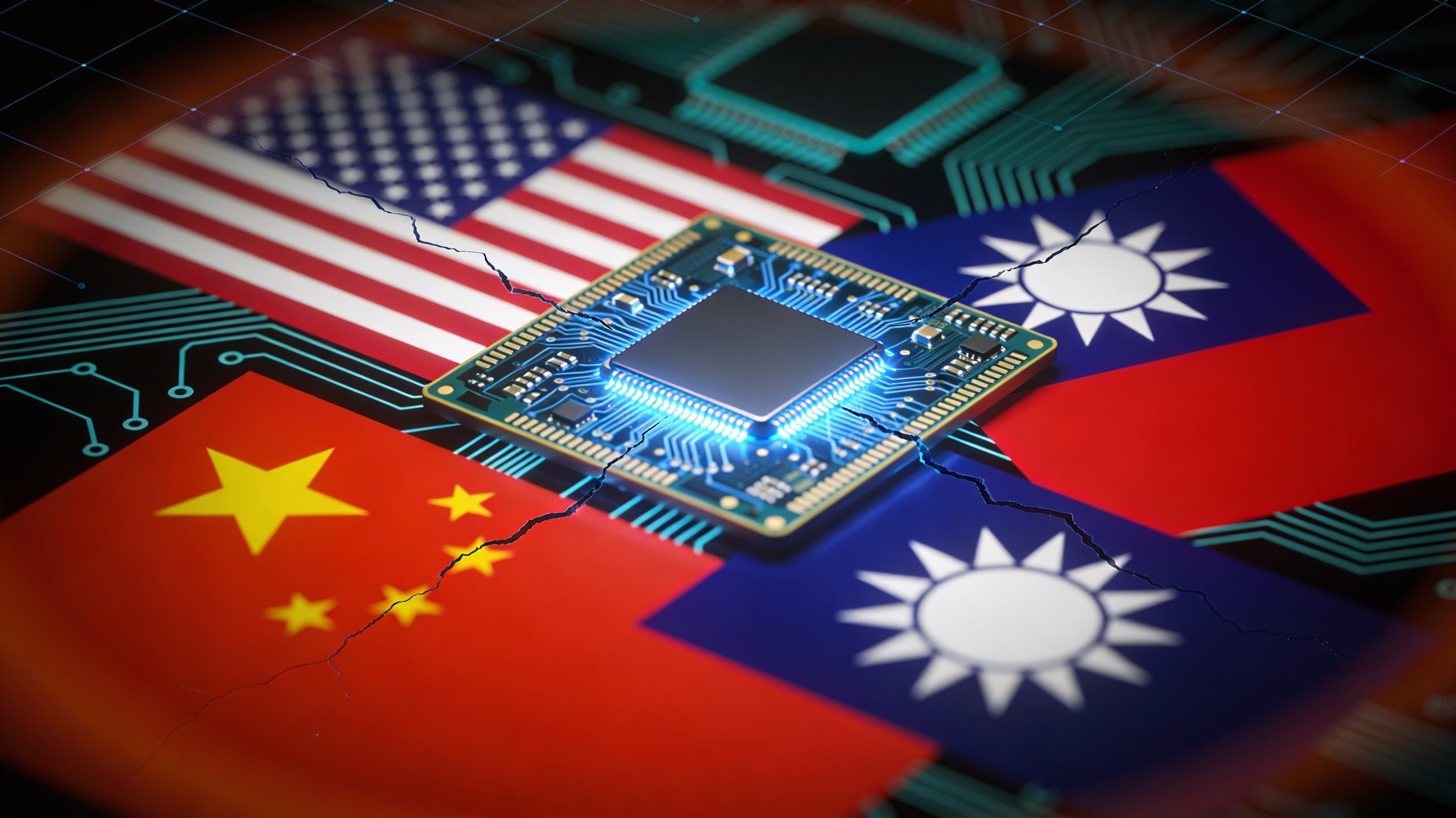
Taiwan is the third gap — and the most significant. TSMC produces the overwhelming majority of the world’s leading-edge logic chips. That concentration cannot be addressed through China+1. Every electronics company with advanced semiconductors in its bill of materials faces Taiwanese semiconductor risk, regardless of where assembly or sub-assembly occurs. Analysis from Acara Solutions captures the dynamic precisely: The Taiwan risk in 2026 is not mainly invasion. It is grey-zone coercion — military probes, information operations, economic pressure tactics — that causes market volatility and procurement uncertainty without triggering the clear scenarios that contingency planners’ model.
The 2026 Semiconductor Tariff Landscape and Its Implications
What makes the current environment significantly more hazardous than in 2022 or 2023 is not any single event. It is the simultaneity of pressures — multiple interconnected risk vectors active simultaneously, each intensifying the others.
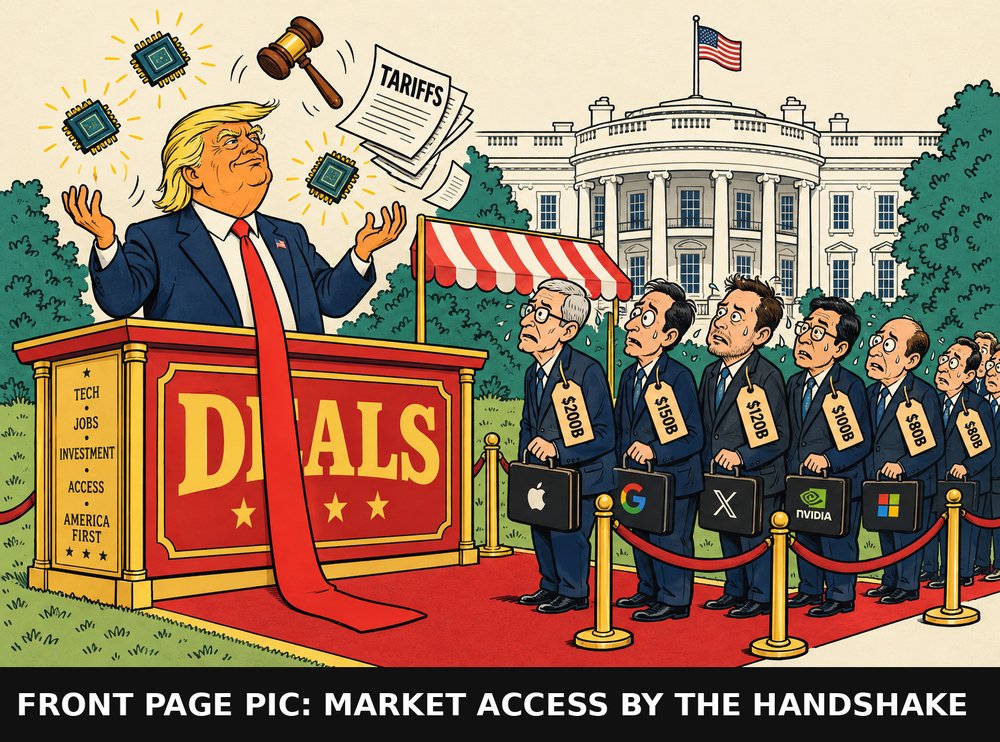
In January 2026, the White House issued a proclamation imposing 25% tariffs on semiconductor imports, semiconductor manufacturing equipment, and derivative products under Section 232. The semiconductor tariff 2026 regime introduces immediate margin pressure across almost all electronics product categories. The current trade truce with China expires in November 2026. As Microchip USA’s tariff analysis highlights, the future after that date is uncertain — and the possible outcomes range from a negotiated extension to renewed escalation under expanded Section 301 measures. Companies that have not modelled both scenarios for their specific product classifications are operating without sufficient visibility.
China’s export control posture has hardened across multiple material categories in a coordinated sequence. The CSIS analysis documents the pattern: gallium and germanium restrictions in 2023, antimony and graphite restrictions following, and the April 2025 expansion to seven rare earth elements and magnets. For procurement teams planning 12 to 18 months forward, the operational effect of these critical minerals export controls is the same as an outright ban — but with less political cover to act on it.
The memory market is experiencing a supply shock that illustrates precisely how geopolitical risk travels through unexpected vectors. EE Times reported that US-led military operations targeting Iranian leadership prompted drone and missile strikes that disabled Qatar’s Ras Laffan Industrial City — responsible for approximately one-third of the world’s helium supply. The Strait of Hormuz was subsequently closed to Western commercial shipping. South Korea, home to Samsung and SK Hynix, sources nearly 65% of its helium from Qatar. Helium is used in the ultra-pure environments necessary for semiconductor manufacturing, and there is no quick alternative. The expected outcome: a 130% increase in combined DRAM and HBM prices by the end of 2026. This is not a supply chain disruption that any China+1 framework anticipated.
Micron, the only remaining US-based producer of DRAM, holds an advantage in this environment compared to its South Korean competitors — but the overall market tightening affects all buyers of DRAM, SSD, and HBM components indiscriminately. The semiconductor supply chain disruption caused by the Ras Laffan event is a textbook example of systemic risk: the trigger is geopolitical, the transmission mechanism is physical infrastructure, and impacts directly on commercial electronics procurement budgets.
The broader technology bloc dynamic is accelerating. The US-led Pax Silica initiative — documented in Xeneta’s 2026 supply chain risk analysis — is actively pulling countries into competitive alignment around semiconductor supply chains and AI component flows. Countries are being asked, explicitly or implicitly, to choose sides. Their decisions determine which export control regimes apply to cross-border transactions, what technology transfers are permitted, and which regulatory standards their manufacturers must adhere to. A sourcing strategy that does not track these alignments in real time is operating with outdated information.
Europe finds itself in a structurally uncomfortable position. The Deloitte 2026 Semiconductor Outlook captures the bind: European manufacturers face a dilemma between US export control requirements — which are strict and essential for accessing the US market — and Chinese countermeasures that punish companies seen as close to Washington. For electronics firms with substantial European operations or customer bases, that pressure is not theoretical.
Compounding this is the defence spending surge across Asia-Pacific. As S&P Global’s electronics supply chain outlook documents, defence budgets across the region are now rising above GDP growth rates. Militaries compete for the same components, substrates, and manufacturing capacity that commercial buyers require — and during an allocation crunch, defence procurement takes precedence. Commercial electronics buyers often find themselves further down the queue without always knowing it.
What Does a Geopolitical Risk Dashboard for Sourcing Look Like?
The issue is not the absence of intelligence on these risks. It is that most electronics companies lack a systematic process to gather it, link it to their specific supply chain structure, and turn it into actionable insights at the pace that decisions need to be made.
A geopolitical risk dashboard for electronics sourcing is not a geopolitical news feed. It is a structured intelligence layer mapped to the company’s own bill of materials, supplier network, and product classifications. The first layer of an effective dashboard is country-of-origin exposure mapped across every tier of the BOM — not just the Tier 1 supplier, but also the origin of the materials, substrates, and process inputs that the supplier depends on. Most organisations have reasonable visibility into Tier 1. Visibility into Tier 2 and Tier 3 is where the real exposure exists and is often underestimated. The gallium in a compound semiconductor chip may pass through a Malaysian assembly facility and a Taiwanese fabless design house before it appears in a purchase order, but its origin — and China’s ability to restrict it — does not change.
The second layer involves sanctions and export control monitoring with automated alert protocols. The pace of regulatory change in this environment — including new entity list additions, expanded export control categories, and licensing requirement updates — is too fast for quarterly compliance reviews. Companies need ongoing monitoring linked to specific counterparties and product classifications, with escalation pathways that reach procurement decision-makers before contracts are signed, not after shipments are held at port.
Tariff scenario modelling constitutes the third layer. The expiration of the November 2026 trade truce, the unresolved question of what follows the current 25% semiconductor tariff structure, and the wider uncertainty across product categories all require modelling tailored to specific Harmonised Tariff Schedule classifications. General tariff exposure assessments are inadequate — the margin impact varies significantly depending on the HS code, country of origin, and product category. Electronics procurement geopolitical risk analysis must be specific to be useful.
Critical mineral dependency tracking is where most China+1 strategies have their largest blind spot. The question is not where the chip was assembled. It is where the gallium, germanium, rare earth magnets, and other controlled materials in that chip originated — and what portion of those supply chains runs through jurisdictions that have demonstrated willingness to use export controls as geopolitical leverage. As US Critical Materials analysis makes clear, the US scramble to build alternative supply chains for these materials is a multi-year project. In the interim, the exposure is real and largely unhedged for most commercial buyers.
Taiwanese semiconductor risk warrants its own dedicated metric on any dashboard: what percentage of each product’s BOM relies on single-source Taiwanese manufacturers, especially for components without qualified alternative suppliers? This is not a hypothetical risk exercise. It is a real operational exposure impacting pricing, lead times, and availability in every grey-zone pressure scenario — none of which require an invasion to cause commercial disruption.
Alliance and bloc alignment track the strategic layer
As the Pax Silica dynamic intensifies and countries increasingly make public decisions about technology standards, data localisation, and export control participation, the geopolitical classification of a given supplier country is not static. A2 Global’s 2026 electronics supply chain outlook documents the momentum building behind nearshoring and supply chain restructuring — but companies that restructure towards countries whose bloc alignment then shifts recreate the exposure in a new geography.
How Should Boards Respond to Geopolitical Supply Chain Risk?
The geopolitical risk of this complexity and speed cannot be managed by procurement alone. Procurement teams are equipped to act within strategic limits, but they are not resourced or positioned to establish those limits amid multi-directional geopolitical pressure.
As MIT Sloan Management Review’s analysis of geopolitical supply chain risks makes clear, the companies that stay ahead of supply chain disruption are those that embed geopolitical intelligence at the executive level as a continuous operating discipline — not those that respond to disruptions after they have materialised.
Board-level visibility is crucial because geopolitical risk decisions often involve trade-offs beyond procurement authority. Qualifying a second-source supplier in a different country requires capital expenditure, engineering resources, and contractual commitments. Accepting higher unit costs to minimise tariff exposure needs margin approval. Building strategic inventory buffers against potential export control escalation involves working capital decisions. These are not solely procurement decisions; they are strategic choices that need executive approval and board awareness to be made efficiently and with appropriate resources.
The companies that have integrated geopolitical risk intelligence at the executive level are not doing so as a compliance formality. They are doing it because the alternative — discovering a critical material restriction or a tariff reclassification through a supplier notification — is operationally and financially more costly than investing in continuous intelligence. Supply chain diversification for electronics is not a one-off restructuring exercise — and the China+1 sourcing strategy, as currently practised, is not meaningful supply chain diversification. It is a dynamic, ongoing discipline that must monitor the geopolitical environment in real time.
For boards specifically, the practical actions are clear. First, demand a BOM-level geopolitical exposure report across Tiers 1, 2, and 3 — not a narrative summary but a structured mapping of where critical materials originate. Second, require tariff scenario modelling for each major product line against both the November 2026 truce extension and the escalation scenarios. Third, establish a quarterly schedule for reviewing geopolitical risk intelligence at the board or executive committee level, with defined escalation thresholds that trigger strategic responses.
The New Baseline for Electronics Supply Chain Risk Management
The China+1 framework was designed for a world where geopolitical risk was episodic — a trade dispute here, a tariff escalation there — and where the underlying structure of global supply chains remained stable between disruptions. That world no longer exists.
In 2026, geopolitical risk in the electronics supply chain is structural. It is embedded in the material composition of every advanced electronic product, in the regulatory stance of every major economy with semiconductor policy ambitions, and in the military and economic calculations of every government that supplies or purchases critical components. It does not appear as a discrete event that procurement can respond to. Instead, it functions as a continuous pressure that accumulates across interdependent vectors simultaneously.
The companies that will sustain a competitive advantage throughout the rest of this decade are those that treat geopolitical intelligence as a core operational discipline — with the systematic rigour of financial risk management, the board-level visibility of regulatory compliance, and the operational integration of a real-time capability rather than a periodic review.
China+1 was the right instinct at the right moment. The moment has moved on, and the instinct must evolve with it.
FAQ’s
Q1: Why is China+1 no longer sufficient for electronics supply chain risk management?
A1: China+1 focuses on assembly concentration but does not address upstream material dependencies. China controls about 97% of global gallium production and 68% of germanium production — essential inputs for compound semiconductors. Moving assembly to Vietnam or India does not alter these dependencies. Alongside 2026 semiconductor tariffs, Taiwan grey-zone risks, and the Ras Laffan helium disruption, which is projected to cause a 130% increase in DRAM and HBM prices, China+1 does not reduce the multi-faceted geopolitical risks facing electronics supply chains.
Q2: What are the key geopolitical risks to the electronics supply chain in 2026?
A2: The principal geopolitical risks to the electronics supply chain in 2026 are: the January 2026 White House proclamation imposing 25% semiconductor tariffs under Section 232; China’s April 2025 rare earth export restrictions covering seven critical elements including terbium and dysprosium; Taiwan semiconductor risk from grey-zone military coercion affecting TSMC production certainty; and the Ras Laffan Industrial City helium supply shock following Strait of Hormuz closure, which is projected to drive a 130% surge in DRAM and HBM prices by end-2026.
Q3: What does a geopolitical risk dashboard for electronics sourcing include?
A3: An effective geopolitical risk dashboard for electronics sourcing comprises five structured layers: full BOM country-of-origin mapping across Tiers 1, 2, and 3; automated sanctions and export control monitoring linked to specific counterparties and product classifications; tariff scenario modelling against Harmonised Tariff Schedule codes for the November 2026 truce expiry; critical mineral dependency tracking for gallium, germanium, and rare earth elements; and Taiwan semiconductor single-source exposure scoring for each product line.
Q4: How do China’s rare earth export restrictions affect electronics manufacturers?
A4: China’s April 2025 export restrictions on seven rare earth elements — including terbium, dysprosium, and samarium — along with associated magnets, create supply uncertainty across advanced electronics, electric vehicle components, and defence systems. China holds a processing monopoly over heavy rare earth elements following the closure of Vietnam’s only commercial refinery in 2023. The restrictions employ special licensing requirements rather than outright bans, causing administrative friction that effectively acts as an embargo without providing Western governments with a clear legal basis to respond.
Q5: What should boards do about semiconductor supply chain geopolitical risk?
A5: Boards should undertake three specific actions. First, commission a BOM-level report on geopolitical exposure, detailing the origins of critical materials across Tiers 1, 2, and 3 of the supply chain. Second, mandate tariff scenario modelling for all major product lines, considering both the November 2026 trade truce extension and potential full escalation scenarios. Third, establish a quarterly review at the executive or board level of geopolitical risk intelligence, with clearly defined escalation thresholds — treating supply chain geopolitical risks with the same systematic discipline as financial and regulatory risks.