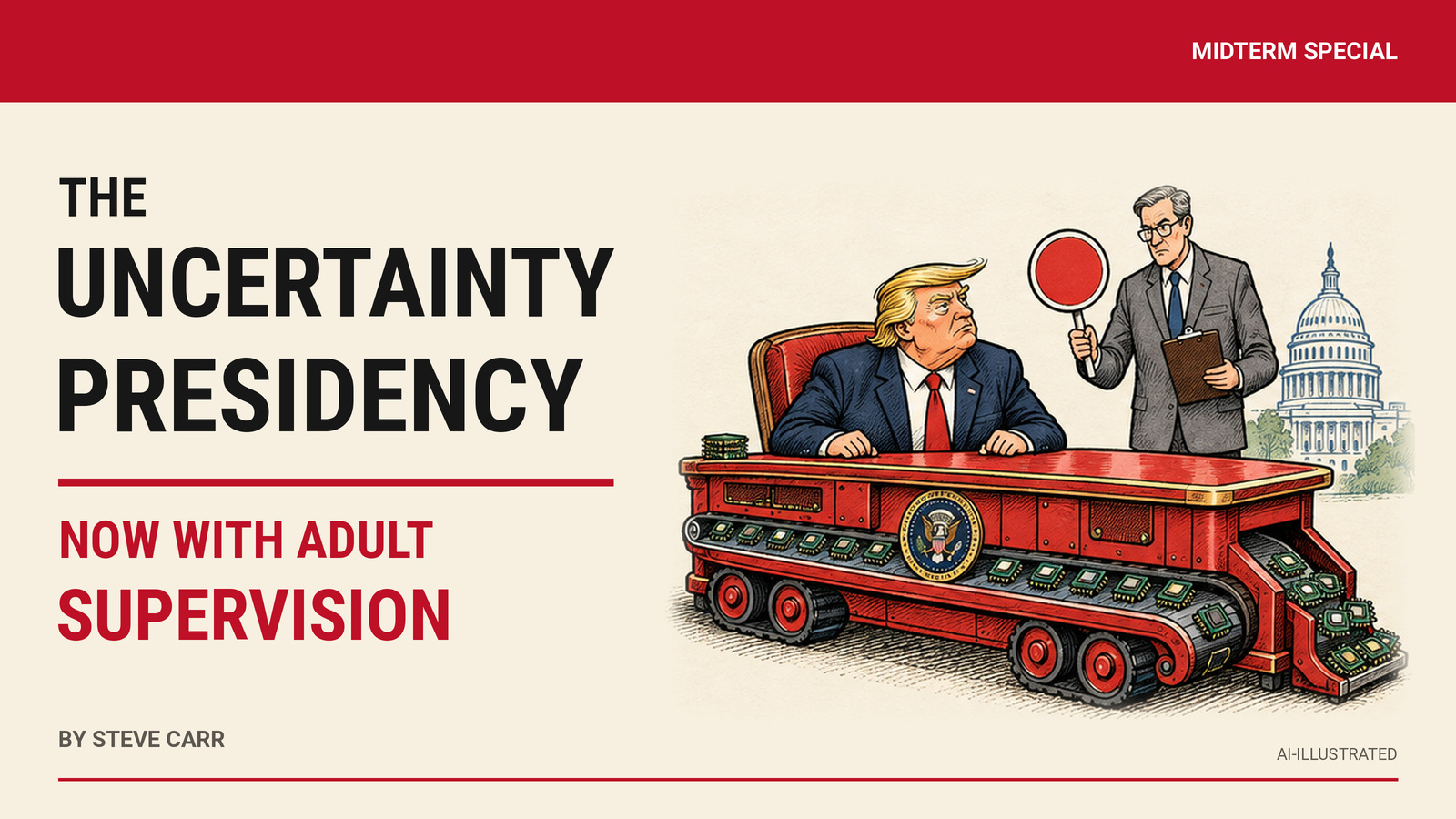
THE UNCERTAINTY PRESIDENCY NOW WITH ADULT SUPERVISION
America voted for a congressional brake. Tech should not mistake it for a factory reset. The 2026 midterm results have delivered a new complication for Donald Trump: an incoming opposition
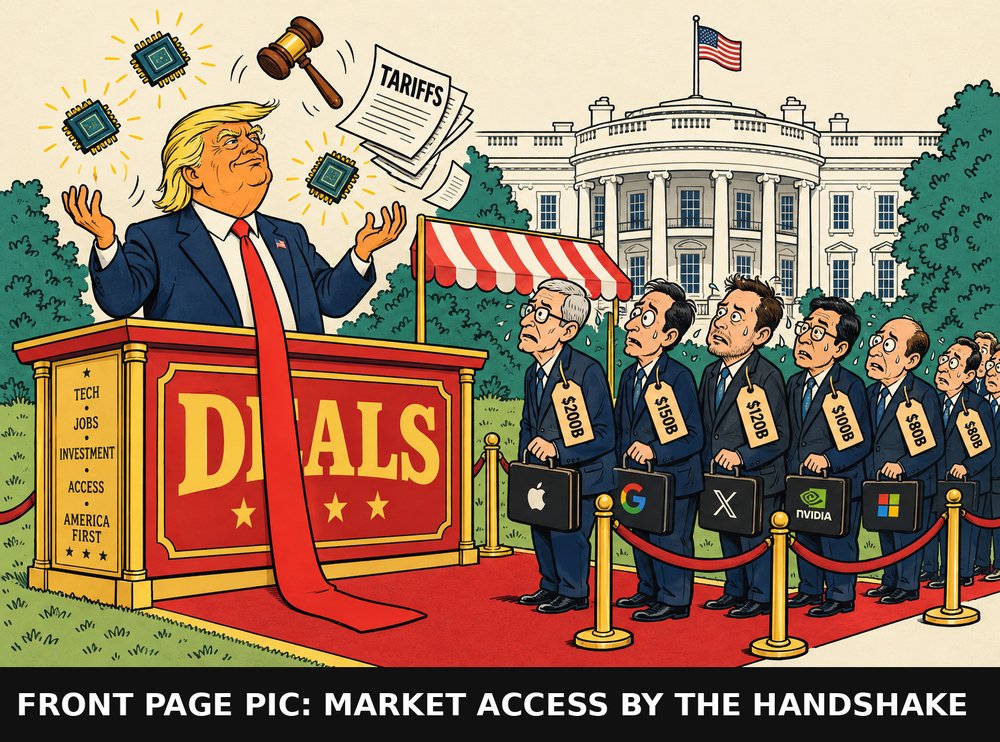


How Donald Trump Turned Big Tech Into a Jumble Sale GeoTechNexus Research Briefing (Satirical Edition) | October 2026 Geotech Briefing · By Bolaji Ojo, Founder and Principal Analyst, GeoTechNexus Satirical

Lean inventory is dead, but stockpiling everything is capital suicide. Steve Carr sets out a risk-based framework for right-sizing buffer stock in 2026 — segmenting by criticality, lead time and

For most of the digital era, energy was treated as a cost line and a politically neutral input. That assumption has broken down. Semiconductor fabs, AI clusters, hyperscale data centres

A new GeoTechNexus research series on power, energy, and the high-tech economy. Electricity availability, grid reliability, power management and access to critical materials have become strategic variables — reshaping where

For three decades, just-in-time defined the electronics supply chain — lean inventory, compressed lead times, and a single, frictionless global flow of components. That model is now breaking. But it

The electronic component distribution sector built its business model on the logic of just-in-time: compressing lead times, smoothing procurement, and moving parts through an integrated, politically permissive global trading system.
Abstract: Semiconductor companies are entering a policy-driven cycle where export controls, subsidies, and geopolitical fragmentation increasingly shape where chips can be built, sold, and supported. This article lays out 10 concrete moves — from PER dashboards and policy-cliff planning to manufacturing optionality and compliance-by-design — to reduce political exposure while protecting shipping continuity, flexibility, and growth.

The Iran war is disrupting electronic component supply chains on multiple fronts — from Strait of Hormuz shipping closures and semiconductor material shortages to rare earth leverage and new sanctions risks. Steve Carr examines what the conflict means for sourcing, manufacturing, and the future of the global electronics industry.
GeoTechNexus
A focused newsletter for decision-makers tracking supply-chain exposure, geopolitical shifts, and technology-risk developments.
GeoTechNexus