There’s a quiet revolution happening inside one of the world’s most powerful AI labs — and it’s being led not by protesters outside the gates, but by the engineers and researchers who build the technology itself.
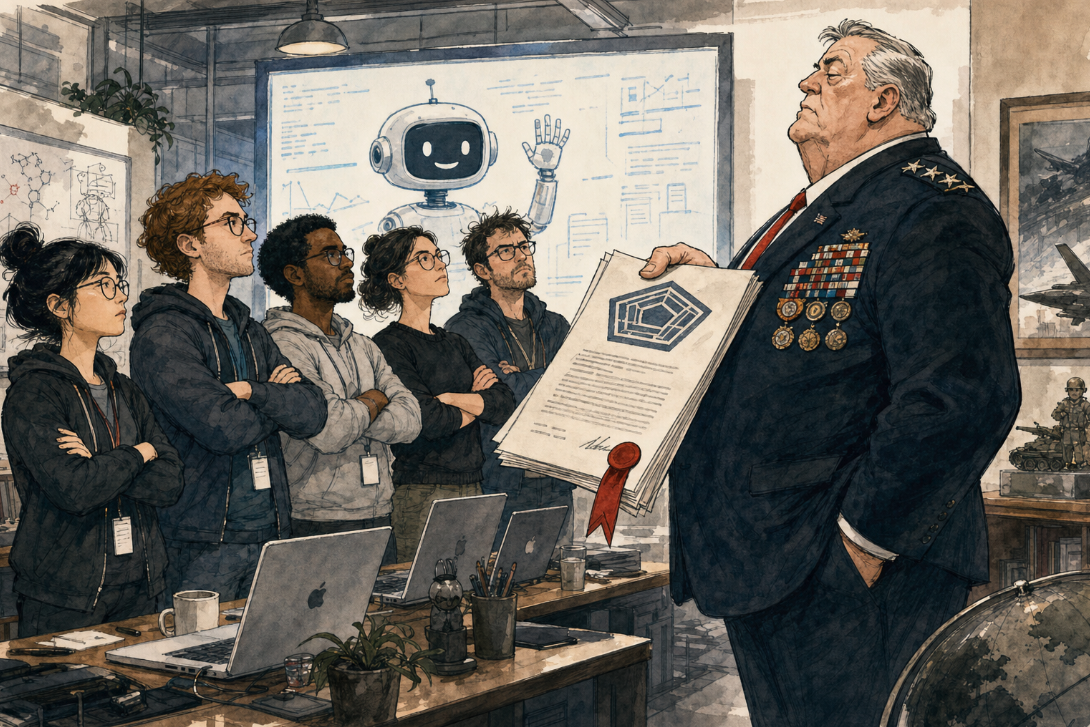
In early May 2026, staff at Google DeepMind’s London offices voted in favor of joining a trade union — a landmark moment that sent shockwaves through the global tech industry. The vote, backed by the Communication Workers Union (CWU) and Unite, came less than two weeks after more than 600 Google employees signed an open letter demanding that CEO Sundar Pichai refuse classified contracts with the US Pentagon. Google signed them anyway. The workers responded by making history.
This isn’t just a labor dispute. It’s a full-blown reckoning over who gets to decide how artificial intelligence is used in war — the companies that build it, the governments that fund it, or the people who write the code.
The Contract That Lit the Fuse
The immediate trigger was Google’s decision to enter into agreements with the US Department of Defense and, according to worker claims, contracts linked to the Israeli military. The Pentagon had been working to formalize partnerships with four leading AI companies — Google, OpenAI, Anthropic, and xAI — under frameworks described as enabling the “lawful use” of AI technology for “any lawful government purpose,” including classified operations.
For many DeepMind employees, that framing wasn’t nearly reassuring enough. AI tools developed for civilian purposes — image recognition, natural language processing, predictive modeling — are dual-use by nature. Once handed over to a military client operating under classified constraints, researchers have no visibility into what their work is actually doing. A language model trained to summarize research papers can, with relatively minor adaptation, be used to process intelligence data. A computer vision system built to identify medical anomalies can be retrained to flag targets.
The workers understood this. Their letter was explicit: they wanted transparency on deployment, an independent ethics review of military contracts, and the ability to opt out of projects that conflict with their professional values. What they got was silence — and then a signed contract.
Why Unionization Is a Different Kind of Power
Open letters, internal protests, and public statements have become familiar tools in tech’s periodic ethics crises. They generate headlines for a few days, then fade. Unionization is different. It creates a legally binding framework for collective bargaining — the right to negotiate, to withhold labor, and to force governance issues onto the table in a way that a petition simply cannot.
The 98% vote figure is extraordinary by any measure. In most workplaces, union votes are contentious. Colleagues disagree. Management lobbies. Fear of career consequences keeps people quiet. The near-unanimity at DeepMind suggests something deeper than a contractual dispute — it reflects a workforce that feels fundamentally unheard on a question they consider existential.
This matters beyond Google. If AI researchers at one of the most prestigious labs in the world are willing to organize over the ethics of military AI, it signals that the social contract between tech employers and their talent is under serious strain. Companies that assume their engineers will build whatever they’re asked to build — because the pay is good and the work is interesting — may need to reconsider that assumption. Under UK law, Google has been given 10 working days to voluntarily recognize the union.
The Broader Industry Problem
Google is far from alone in this dilemma. Microsoft has deep integrations with US defense agencies through Azure Government and various cloud contracts. Amazon Web Services powers a significant portion of the US intelligence community’s infrastructure. Palantir has built its entire business model around government and military data analytics, recently expanding its footprint considerably.
What makes the DeepMind case different is the profile of the workers involved. These aren’t back-office contractors or peripheral support staff. They are AI researchers — people with PhDs, with deep expertise in the systems they’re building, with a genuine technical understanding of what those systems can and cannot do in a conflict environment. When they raise concerns about military AI, they are doing so with more domain knowledge than almost anyone else in the conversation.
Their concerns are grounded in a real and growing body of evidence about the risks of deploying AI in high-stakes, time-pressured military contexts: algorithmic bias in targeting systems, lack of explainability in decision-making, the danger of automation bias where human operators defer too readily to machine outputs. These aren’t hypotheticals. They’re documented problems.
What Happens Next
The union’s next moves will be closely watched. If the CWU and Unite can secure formal recognition from Google — which the company is not legally obligated to grant immediately under UK law, though it faces significant reputational pressure to do so — it opens the door to binding negotiations on ethics policies, contract transparency, and worker opt-out rights.
If Google resists recognition, it risks a protracted and very public dispute at precisely the moment the AI industry is trying to position itself as responsible, trustworthy, and aligned with human values. That’s a hard narrative to sell when your own researchers are refusing to work for you.
For the wider technology industry, this story is a preview of conflicts to come. As AI systems become more capable and more deeply embedded in both civilian and military infrastructure, the question of who has a say in how they’re deployed is only going to intensify. The engineers building these tools are starting to demand an answer.