
Powering Agentic AI Data Centers with a Global Ecosystem
Is Arm’s new AGI CPU about to become the ultra‑efficient brain of tomorrow’s AI data centers?
Arm’s “Arm Everywhere” event unveils the Arm AGI CPU as a purpose‑built, ultra‑efficient engine for the coming era of agentic AI data centers, backed by a powerful coalition of partners including AWS, Google, Meta, Microsoft, Oracle, Nvidia, Anthropic, TSMC, Samsung and SK Hynix.
Arm AGI CPU: redefining AI data center efficiency for agentic AI workloads
Arm positions the AGI CPU as its first server‑class chip sold as silicon, not just IP, targeting head‑node orchestration, agentic AI and large‑scale cloud workloads. The device combines 136 Neoverse V‑series cores and a 300‑watt TDP on TSMC 3 nm with tightly coupled DDR5 and PCIe Gen6/CXL 3, aiming to maximize performance‑per‑watt and performance‑per‑rack in standard OCP servers.
From low‑power mobile DNA to global AI factories and cloud infrastructure
Arm’s narrative starts with its ultra‑low‑power heritage: a PDA processor so efficient it kept running from leakage current after being unplugged, paving the way for dominance in GSM, Nokia and BlackBerry phones and modern smartphones. SoftBank’s 2016 acquisition is cast as the funding inflection that allowed Arm to extend this efficiency playbook from mobile into Neoverse cloud CPUs, automotive compute and “physical AI” at the edge.
Arm emphasizes unmatched scale: more than 350 billion Arm‑based chips shipped, roughly three times the number of humans who have ever lived, and around 160 Arm chips per household worldwide. This scale feeds an “ecosystem of ecosystems” spanning iOS, Android, Windows and Linux, plus 22 million+ developers and millions of applications across mobile, cloud, automotive and IoT.
Key cloud and AI leaders are quoted to validate the platform:
- AWS highlights its Graviton instances, noting that Arm’s efficiency lets customers run cloud‑native and AI workloads with better price‑performance and lower energy usage.
- Google and Google Cloud describe Arm as foundational for containerized services and AI workloads, helping meet strict sustainability and TCO goals.
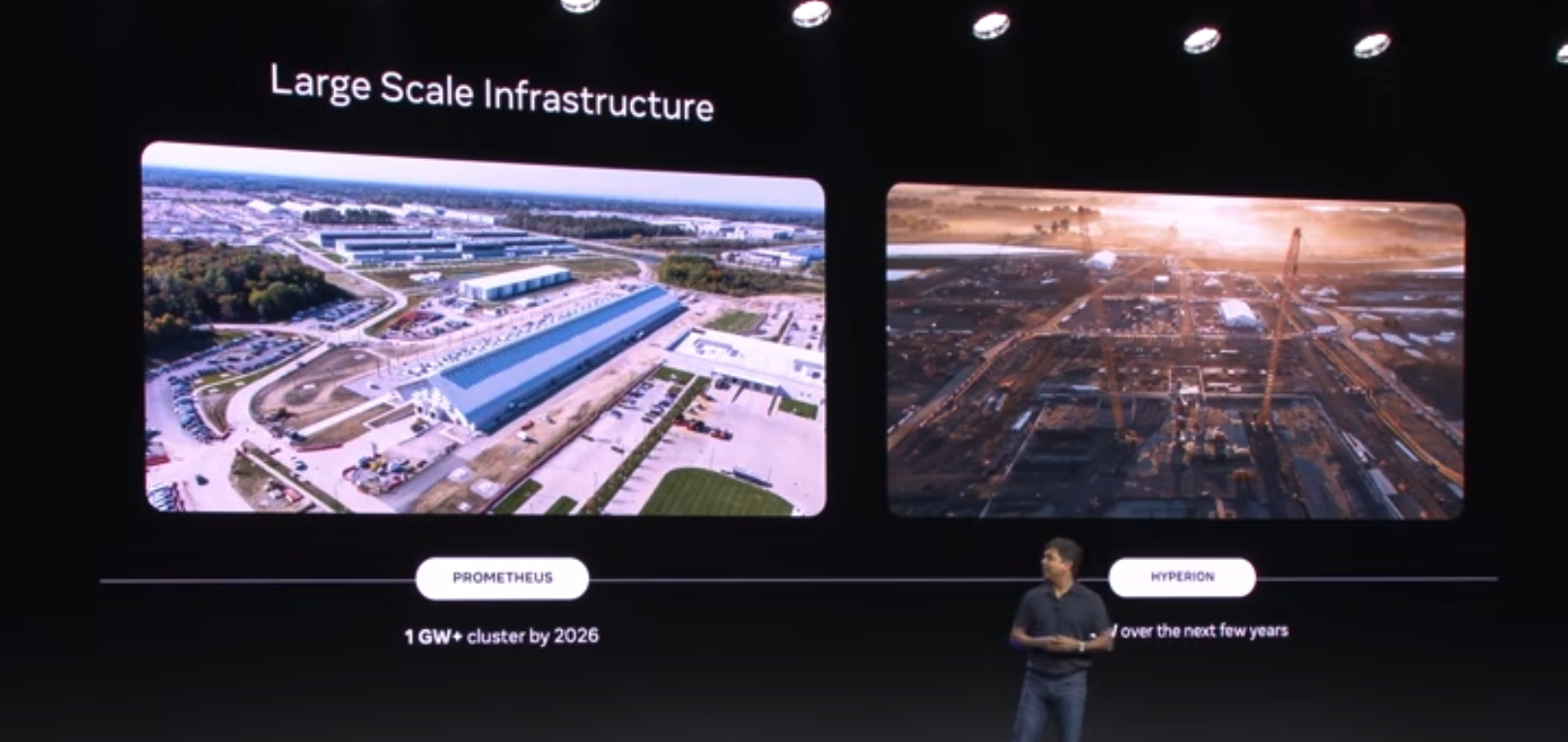
- Meta calls Arm a “natural partner” for its multi‑gigawatt Prometheus clusters and its ambition to deliver “personal super‑intelligence” to billions.
- Microsoft points to its Cobalt Arm CPUs as a key layer in Azure for AI‑driven applications.
- Oracle underlines that Arm‑based cloud infrastructure broadens choice for enterprise AI and database workloads.
- Nvidia says Arm architecture is foundational across its robotics, automotive, DPU and accelerated computing platforms, pairing efficient Arm CPUs with powerful GPUs.
- Anthropic appears as part of the next‑generation model ecosystem building frontier AI on Arm‑optimized Linux stacks in hyperscale clouds.
Why agentic AI workloads are stressing legacy x86 data centers
The keynote makes a strategic argument: AI has amplified the importance of CPUs, not diminished it. Historically, CPUs handled search and SaaS; now accelerators generate tokens while CPUs orchestrate prompts, memory and responses across distributed systems. The shift to agentic AI—autonomous agents chaining tools and workflows—drives token volume per user up by roughly 15x, pushing estimated CPU demand in AI data centers from about 30 million cores per gigawatt to around 120 million and exposing power and density limits of legacy designs.
Inside the Arm AGI CPU architecture for cloud‑scale AI and AGI systems
Technically, the Arm AGI CPU is presented as a clean‑sheet answer to that orchestration problem.
- 136 Neoverse V‑series cores, each with 2 MB of private L2 cache, up to 3.7 GHz.
- 96 lanes of PCIe Gen6 with CXL 3 to attach accelerators and CXL memory from partners such as Nvidia, Samsung and SK Hynix.
- DDR5 delivering about 6 GB/s of bandwidth per core with sub‑100‑ns latency via a dual‑chiplet layout where each die carries its own memory and I/O.
- 300‑watt TDP on TSMC’s 3‑nm node, enabling very high core density in standard OCP racks.
Arm reports more than 8,000 AGI CPU cores in a 36‑kW air‑cooled rack and over 45,000 cores plus a petabyte of memory in a 200‑kW liquid‑cooled rack, with actual draw at roughly half the rack rating. By avoiding SMT and instead matching bandwidth and latency to core count, the design targets linear scaling with minimal wasted silicon.
Partner silicon and real‑world deployments in hyperscale AI data centers
TSMC provides the advanced manufacturing that enables AGI CPU’s frequency and efficiency, while Samsung Semiconductor and SK Hynix supply memory and packaging to keep high‑core‑count systems well‑fed at reasonable power.
Meta describes AI clusters growing to tens of thousands of GPUs, with Prometheus expected to exceed 5 GW, and argues that only an Arm‑based CPU with this efficiency can orchestrate such fleets within power limits. OpenAI notes that compute and energy, not ideas, are the bottleneck; CPUs that deliver the same performance at lower power effectively buy more inference capacity and longer agent “thinking” time. Other adopters such as SAP, SK Telecom, Cloudflare, Cerebras and Rebellions see AGI CPU as a scalable head node and orchestration engine for frontier AI and telecom AI services.
The Arm roadmap for next‑generation AI infrastructure
Arm underlines over 15 years of investment to make Arm a first‑class target for Linux, compilers, AI frameworks and cloud tooling, with a major acceleration after Neoverse launched in 2019. Today AWS, Google, Meta, Microsoft, Oracle, Nvidia, Anthropic and others co‑invest in Arm software enablement, and many AI workloads reportedly run best on Arm CPUs under Linux in performance‑per‑watt terms.
Meta’s Paul Saab recounts that a five‑engineer team re‑ported Meta’s stack to Arm in about 90 days, later matching x86 performance while gaining substantial efficiency, and suggests LLM‑assisted optimization now makes Arm adoption even easier. Looking forward, Arm commits to a multi‑generation roadmap—AGI CPU 2 and 3 plus continued Neoverse CSS—turning chip sales into a new growth engine alongside IP licensing and positioning Arm AGI CPU as a long‑term platform for AI‑era data centers from edge devices to hyperscale “AI factories.”
Conclusion: Arm’s play for the AI data center decade
Arm AGI CPU marks a strategic shift from Arm as a pure IP licensor to a full‑stack silicon provider at the heart of AI infrastructure. By combining ultra‑efficient Neoverse cores, advanced manufacturing from TSMC, memory partnerships with Samsung and SK Hynix, and deep integrations with hyperscalers like AWS, Google, Meta, Microsoft and Oracle, Arm is positioning its architecture as the default orchestration layer for agentic AI data centers.
With Nvidia, Anthropic and the broader Linux ecosystem also aligned around Arm‑optimized platforms, the company is betting that performance‑per‑watt and performance‑per‑rack will define the next decade of AI—and that Arm AGI CPU will be the processor that turns today’s experimental AI factories into mainstream, global infrastructure.