How Donald Trump Turned Big Tech Into a Jumble Sale
GeoTechNexus Research Briefing (Satirical Edition) | October 2026
Geotech Briefing · By Bolaji Ojo, Founder and Principal Analyst, GeoTechNexus
Satirical edition: the facts and sources below remain intact; only the tone has been tariffed.
Two years in, the global technology industry has been reshaped by a presidency that treats trade policy like open-mic night: tariffs imposed, struck down by his own courts, then reimposed under a different statute before lunch; comfortably partial nationalizations of struggling chipmakers; and market access sold a la carte, with the state taking a tip. Tech executives caved or collaborated, then smiled for the group photo anyway. We recommend a rethink, ideally before the midterm bazaar reopens.
Uncertainty Is the Only Certainty

I have argued since before the 2024 election that the defining contribution of a second Trump presidency to the global economy would be uncertainty, and that no sector would absorb more of it than technology. I confess I did not expect vindication to arrive so promptly, so comprehensively, or with such theatrical flair. Our core belief stands: nations that dominate electronics and semiconductor markets, and control the awkwardly important bits of the supply chain, have discovered that leverage is simply more fun than governance.
Nearly two years in, the results are in. Policies have changed instruments, legal foundations and targets, occasionally within the same press conference. For an industry that plans fabs on ten-year horizons and qualifies components over eighteen months, this is no longer a business environment; it is an escape room. Volatility has stopped being a risk factor and become the weather.
“If U.S. trade policy were software, it would need its own changelog”
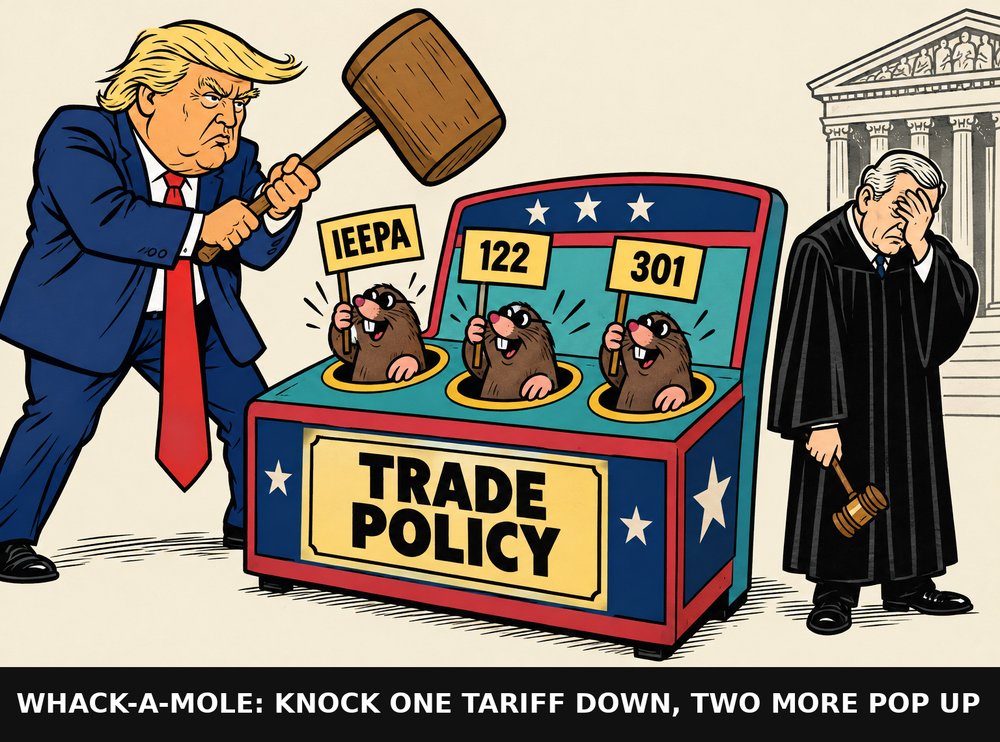
Consider the legal whiplash, best viewed with a neck brace. The sweeping tariffs imposed under the International Emergency Economic Powers Act were struck down 6-3 by the Supreme Court on February 20, 2026, which politely observed that the statute does not, in fact, authorize the President to tariff things. No matter: the administration simply opened a different drawer and pulled out Section 122 of the Trade Act, imposing a 10 percent global tariff. When that 150-day authority lapsed on July 24, Section 301 forced-labor tariffs of 10 or 12.5 percent on 60 economies took effect the very same morning, presumably over the same cup of coffee. Three tariff regimes in five months, plus refund claims on duties the courts ruled invalid. If U.S. trade policy were software, it would need its own changelog.
It’s a Deal, It’s a Steal
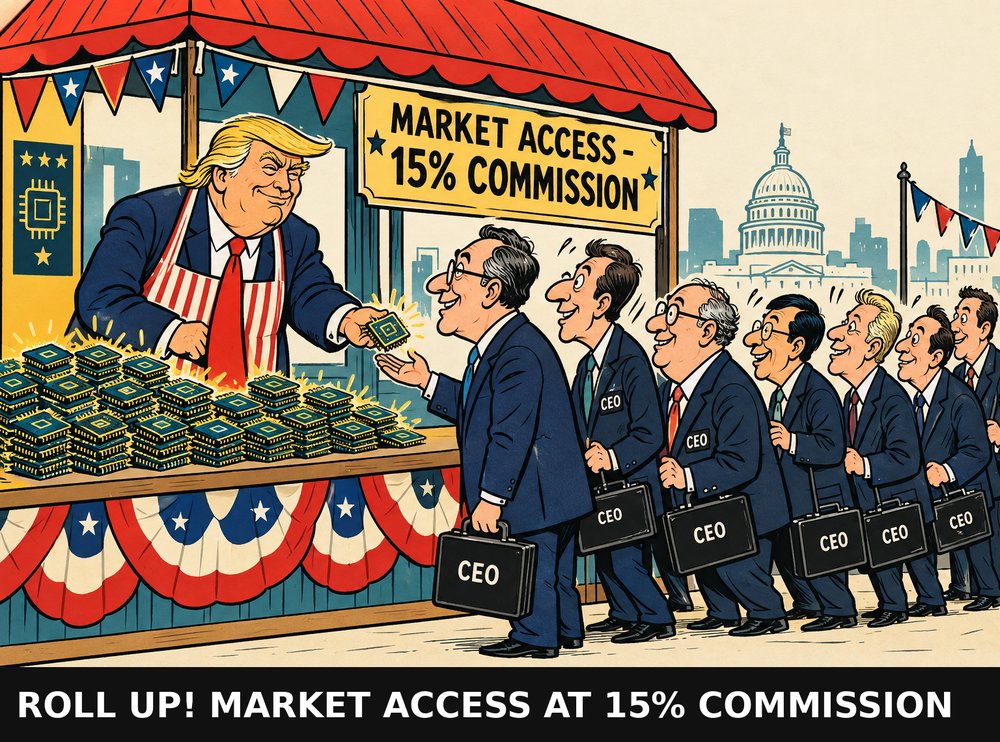
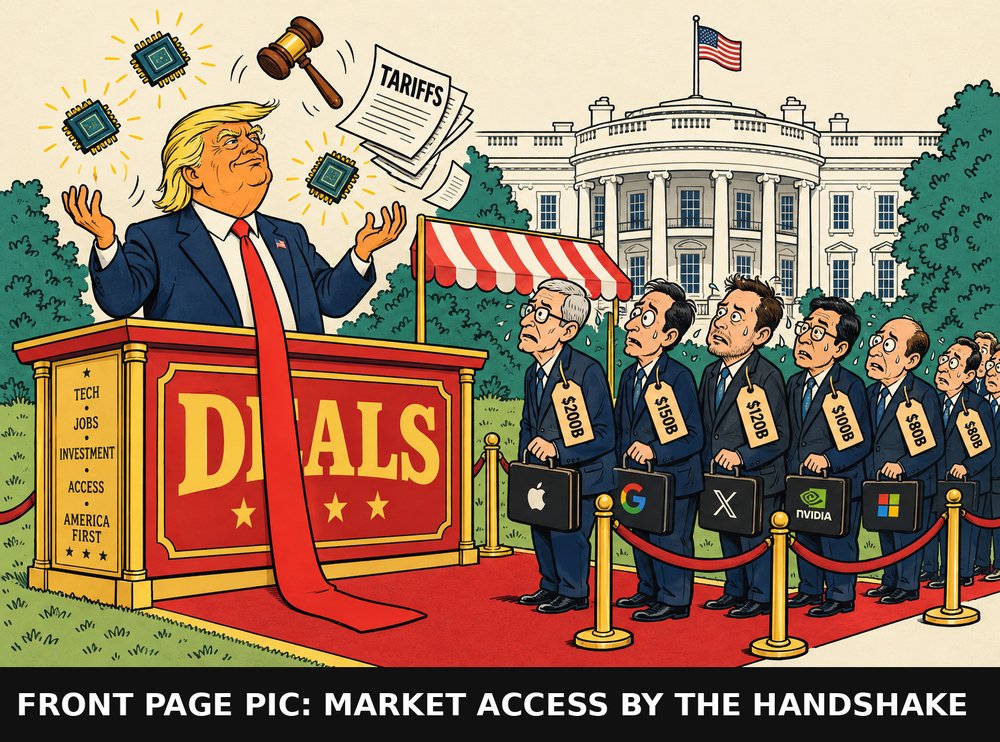
The second shift is the replacement of predictable rules with transactional bargains, an arrangement economists have declined to name because every Latin translation sounds like extortion. In August 2025 Washington took a 9.9 percent stake in Intel Corp. for $8.9 billion, funded by converting CHIPS Act and Secure Enclave grants it had not yet paid: buying shares with the seller’s own gift card. The Defense Department took a 15 percent stake in MP Materials. Nvidia and AMD were allowed to sell certain chips to China in exchange for 15 percent of the revenue, and in December 2025 the President cleared Nvidia’s H200 for approved Chinese customers in exchange for a 25 percent cut of the take. Each deal may be defensible in isolation. Together they announce that market access in America is no longer a matter of complying with published rules; it is a matter of getting a good table at the White House.
Semiconductor trade policy followed the same pattern, with knobs. On January 14, 2026, a Section 232 proclamation slapped a 25 percent tariff on a narrowly (and tellingly) defined set of advanced chips such as Nvidia’s H200 and AMD’s MI325X, with exemptions for U.S. data centers, startups, R&D and other sufficiently favored domestic uses. The government warned that broader tariffs may follow, which under this administration passes for forward-looking guidance. A parallel export rule required certain foreign-made advanced chips to route through the United States first, for security review and a polite bit of tariffing, before heading to China. The design is clever, opaque and revocable: the precise trifecta that persuades CFOs to invest in absolutely nothing anywhere.
Rare Earth Wars: Beijing Hits Back
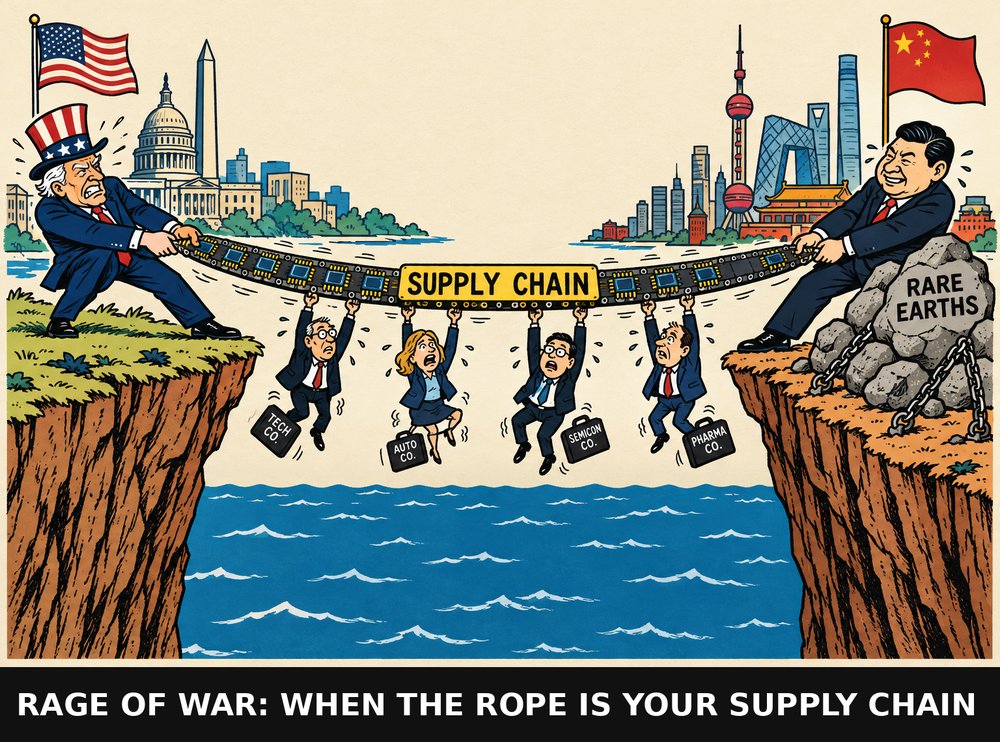
Beijing, never one to miss a cue, has answered in kind. China still licenses exports of seven medium and heavy rare earths, plus gallium and germanium, those minerals nobody briefed the board about until they became leverage, while its broader October 2025 package sits merely suspended under the Busan truce, extended in September to January 10, 2027, a date now circled in red on every procurement VP’s desk calendar. The International Energy Agency warns full implementation could put about $6.5 trillion of downstream production outside China at risk, which is a remarkable number of trillions for materials most executives cannot spell. The Nexperia affair showed the corporate version. After the Dutch government took control of the Wingtech-owned chipmaker on September 30, 2025, Beijing blocked exports of its China-packaged chips; Honda halted output at its Mexico plant in late October while Volkswagen, Bosch and ZF scavenged for supply like shoppers before a hurricane. The Hague suspended its order on November 19, 2025, yet the custody battle between Nexperia’s Dutch headquarters and its China unit over wafer supply drags on, with the automakers cast as the children.
The Bosses Who Played Ball
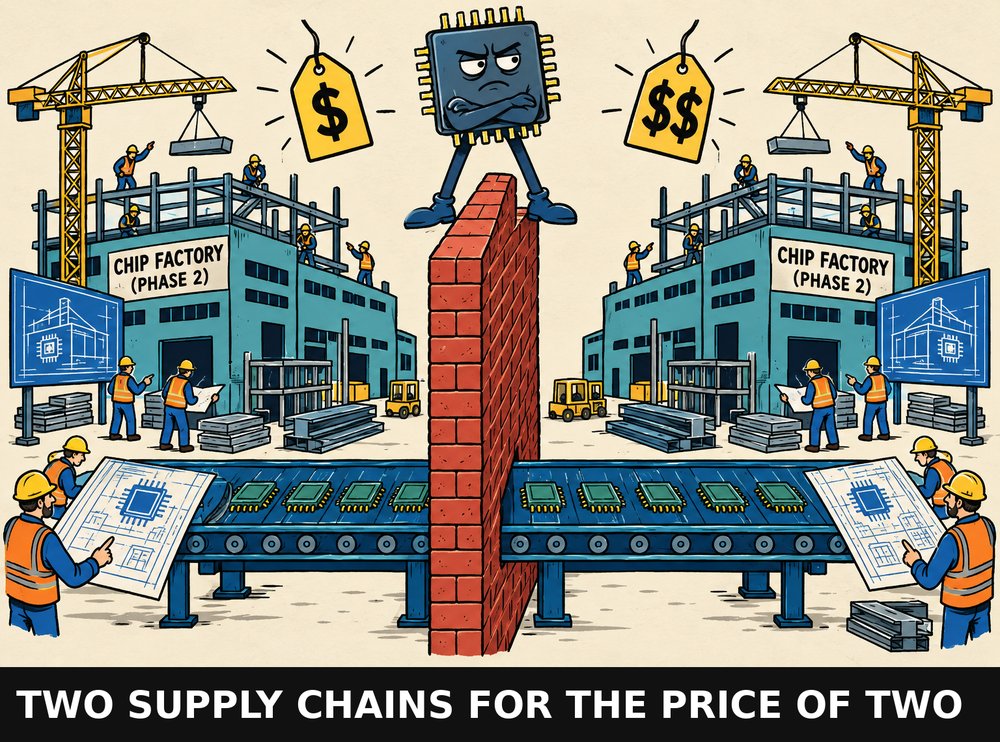
Now for the uncomfortable part: technology leaders did not merely tolerate the bifurcation of the global electronics and semiconductor supply chain and the innovation system that sustains it; a striking number showed up with hard hats and asked where to dig. Rather than defend open standards and predictable trade, chief executives queued politely for private accommodations: investment pledges in exchange for exemptions, revenue-sharing in exchange for licenses, equity in exchange for subsidies. Each company feathered its own nest and photographed the feathers for LinkedIn. The aggregate result is two increasingly separate technology systems, duplicated capacity, rising costs and a slower global innovation cycle. Over a decade that means smaller addressable markets, faster Chinese substitution and an innovation base fractured across incompatible standards. But at least everybody got their individual deal, which is, apparently, what matters.
Two Years of Trump: Five “Wins”
- Policy volatility and legal uncertainty. Tariff authorities rotated so quickly that cost planning became a form of performance art.
- Transactional market access. Equity stakes, revenue-sharing and exemptions, all negotiated case by case, favored the largest and best-connected firms. The lobbyists, it turns out, were the market makers all along.
- Critical-materials coercion. Chinese controls on rare earths, gallium and germanium revealed that upstream resilience was mostly a PowerPoint.
- Corporate-level geopolitical seizures. Nexperia proved that ownership structures and packaging locations can now detonate a supply chain overnight.
- Rising cost of duplication. Parallel supply chains, compliance burdens and new tariffs, including polysilicon duties due December 4, handed the bill to OEMs, EMS providers and distributors, as is tradition.
Next Up: More Madness, Only Faster
Uncertainty will not abate; it will simply change costume and arrive earlier. The September Trump-Xi summit purchased a scant two-month truce extension, to January 10, 2027. Pauses are not settlements, any more than a ceasefire is a honeymoon. Expect broader semiconductor tariffs, a fresh U.S.-China deadline in January, post-midterm recalibration after the November 3 elections, and continued deal-making with individual firms. The industry should plan for volatility as the base case, and perhaps retain a good therapist.
Five Things Tech Could Do Besides Kneeling
- Demand rules, not deals. Press Congress and the administration for statutory, published and time-bound tariff and export-control frameworks with clear exemption processes. A radical idea: knowing the rules before you price the product.
- Build a genuine industry coalition. Coordinate through SIA, SEMI, ECIA, IPC and allied associations on shared positions, rather than queuing individually for velvet-glove treatment.
- Secure upstream materials collectively. Co-invest in rare-earth, gallium, germanium and substrate capacity with allied governments and partners, ideally before the next calendar gets circled.
- Protect the global innovation commons. Defend cross-border research, talent mobility and common standards: the boring plumbing that keeps the industry’s R&D engine running.
- Institutionalize geopolitical resilience. Map exposure by supplier, geography and regulation; dual-source critical parts; stress-test portfolios for export-control and tariff shocks. Then, and this is the hard part, actually act on the map.
“Today’s deals will be invoiced collectively tomorrow, with interest”
Team Up or Break Up
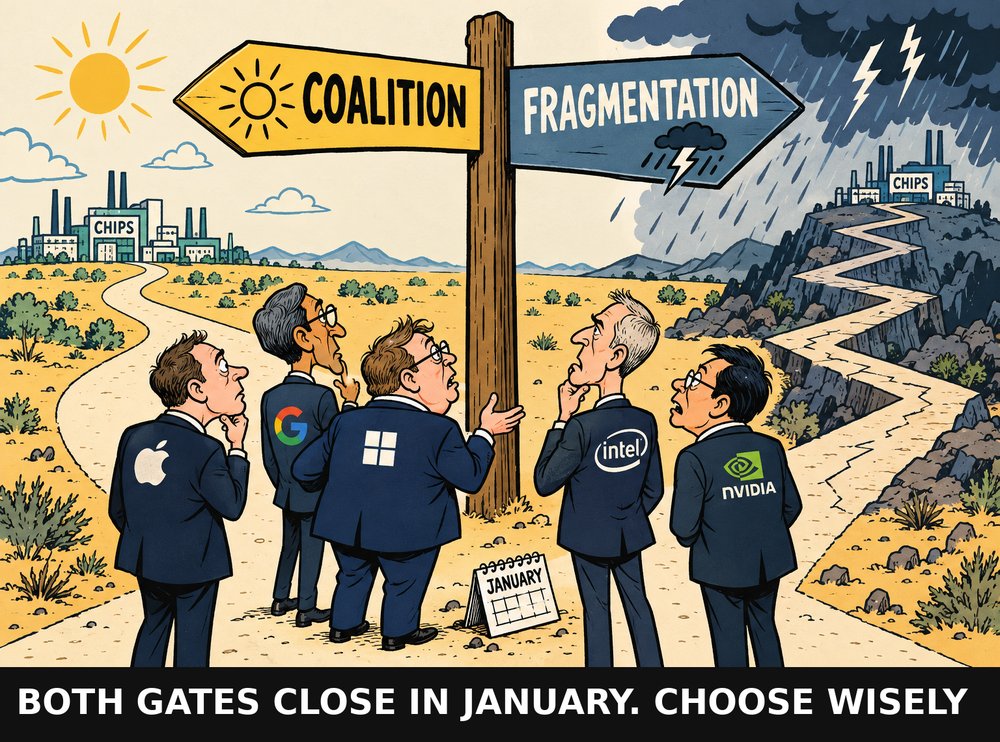
The industry does have unifying needs: predictable rules, secure materials, open talent flows and access to global markets. Whether a coalition emerges depends on whether leaders accept that the individual deals cut today will be invoiced collectively tomorrow, with interest. GeoTechNexus predicts continued fragmentation unless boards push otherwise. The firms that break the pattern and lead a coalition will help shape the next decade of the technology economy. The rest can keep auditioning for exemptions.
Sources (Because Satire Still Needs Receipts)
- Congressional Research Service, Supreme Court ruling on IEEPA tariffs
- Thomson Reuters, U.S. tariff authorities after IEEPA
- CBC News, U.S. stake in Intel, MP Materials and Nvidia/AMD revenue deal
- White House fact sheet, Section 232 advanced chips
- Reuters, revised export restrictions and tariffs
- Materials Dispatch, China export controls profile
- Reuters, IEA on rare-earth curbs
- Tom’s Hardware, Nexperia supply disruption
- Reuters, polysilicon Section 232 action
- Reuters, U.S.–China truce extended to January 10
- American Bar Association, Section 122 expiry and Section 301 replacement
- Intel newsroom, U.S. government equity agreement
- CNBC, Nvidia H200 China sales with 25% cut
- Government of the Netherlands, suspension of Nexperia order