By Bolaji Ojo
Add PER – politically exposed revenue – to your growing list of acronyms.
In an earlier phase of globalization, revenue performance was driven primarily by product‑market fit, execution, and macroeconomic conditions. Country risk and currency volatility mattered but rarely determined whether a viable market could disappear abruptly. That assumption no longer holds for technology and semiconductor firms.
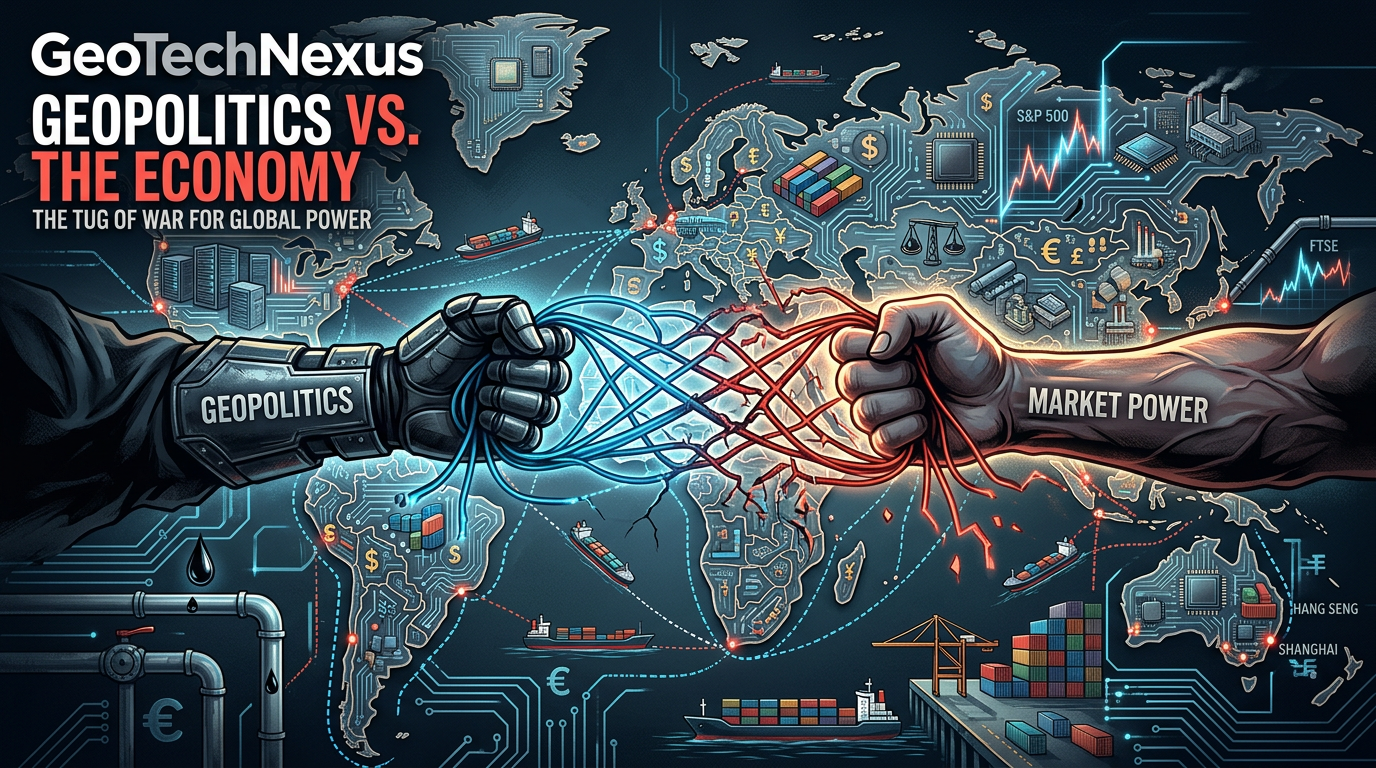
An increasing share of industry revenue is now best understood as politically exposed revenue (PER), income whose continuity depends on policy decisions made by governments. This is not a challenge confined to any single country or bloc. It reflects a broader structural shift in which advanced technologies have become instruments of state power, exposing firms globally to targeted political risk.
Defining Politically Exposed Revenue
Politically exposed revenue refers to technology income that can be materially altered or eliminated by government actions aimed at specific technologies, counterparties, or jurisdictions, rather than by general economic conditions.
Common characteristics include:
- Sales requiring export or import licenses tied to national security or human‑rights criteria
- Revenue from customers in jurisdictions designated as strategic rivals or high‑risk
- Exposure to markets where regulatory or security tools are used to favor or penalize foreign suppliers
PER differs from traditional country risk in three ways:
- Targeted: It applies to specific firms, technologies, or sectors
- Binary: Policy actions can reduce revenue from substantial to zero with little warning
- Exogenous: Commercial performance offers limited protection
The experiences of Huawei and Nvidia illustrate this dynamic. Huawei’s exclusion from U.S. markets and constraints on its access to advanced manufacturing were the result of government action, not competitive failure. Similarly, Nvidia’s reduced access to parts of the Chinese AI market reflects export controls and counter‑measures rather than diminished demand or product weakness.
PER vs. Traditional Country and FX Risk
Multinationals are accustomed to managing country and currency risk, which tend to be diffuse, gradual, and partially hedgeable. PER behaves differently. It is rule‑driven and discrete: a regulatory change can instantly render a product unsellable or a customer inaccessible.
Recent examples include:
- Restrictions on foundries serving certain customers at advanced nodes
- Licensing requirements or bans affecting entire equipment categories
- Security reviews limiting cloud, data, or platform services
PER is best understood as precision‑guided political risk aimed directly at specific revenue streams.
Why PER Is Structural
PER is not a temporary disruption. It reflects durable changes in how major powers view technology and economic interdependence. Three factors make it structural:
- Securitization of Advanced Technology
High‑end chips, AI, cloud platforms, and core software are now treated as strategic assets linked to military, intelligence, and industrial power. Once framed this way, access is governed by statecraft rather than market logic. - Reciprocal Controls and Industrial policy
The U.S. and its allies have implemented targeted export controls, while China has responded with its own licensing regimes, cybersecurity rules, and industrial‑policy measures. Other states are following suit. The result is a persistent architecture of control rather than episodic intervention. - Deep Pre‑existing Integration
Unlike earlier periods of strategic trade restriction, today’s controls are layered onto tightly integrated global supply chains. Unwinding these linkages will take years, and the policies affecting them are designed to endure across political cycles.
Continuity and Change
Strategic trade controls are not new, but their scope, depth, and symmetry are. Controls now reach mainstream commercial technologies, apply extraterritorially through IP and software rules, and are employed by multiple major economies. In this sense, PER represents an expanded and more complex evolution of earlier models, operating in a far more interconnected technology economy.
Why Technology Firms Are Especially Exposed
PER affects other sectors, but technology and semiconductors are uniquely vulnerable due to:
- Dual‑use technologies that serve both civilian and military purposes
- Concentration of critical capabilities among a small number of firms
- Political visibility and symbolism of technology leadership
- Integration into critical infrastructure, from cloud to communications
As a result, political risk is no longer peripheral for technology firms — it is a core strategic variable.
Where PER Is Most Visible
PER spans the technology value chain:
- AI and data‑center semiconductors: Export controls and counter‑measures make revenue contingent on licensing decisions rather than demand.
- Foundries and memory producers: Access to customers at advanced nodes is increasingly determined by external policy constraints.
- Equipment and tools: A significant share of growth in politically sensitive markets is now subject to approval risk.
- Telecom, cloud, and platforms: Security reviews, localization rules, and informal guidance affect market access and contract stability.
Strategic Implications
For firms, PER requires:
- Clear segmentation between politically reliable and exposed revenue
- Critical evaluation of market‑specific product variants, particularly where they may accelerate local substitution
- Reassessment of supply‑chain and capacity decisions to manage jurisdictional exposure
For globalization, PER accelerates:
- Fragmentation into partially overlapping technology systems
- A shift from efficiency‑driven optimization toward resilience and political alignment
Questions for Boards and Executives
Three questions should guide strategic discussions:
- Are our core products treated as strategic assets by governments?
- How much revenue depends on markets viewed as geopolitical rivals?
- Are we investing in products that create durable value or merely delaying substitution?
Politically exposed revenue is not just another risk factor. It reflects a fundamental shift in the relationship between technology, markets, and state power. Firms that treat it as temporary are likely to misprice risk, misallocate capital, and misunderstand the strategic environment in which they now operate.
Bolaji Ojo is principal analyst and founder at GeoTechNexus. He is reachable at bojo@geotechnexus.com.