By Bolaji Ojo
Principal Analyst, Geotechnexus
The chip cycle isn’t just supply-and-demand anymore but policy-shaped. Export controls, subsidies, and geopolitical fragmentation are changing where chips can be built, sold, and supported. Here are 10 practical steps from Geotechnexus that chipmakers can take to reduce political exposure while protecting flexibility and growth.
If the cycle is increasingly shaped by policy shocks, export controls, and subsidized capacity buildouts, then “riding the cycle” is no longer just an exercise in inventory discipline and capex timing. It becomes a portfolio problem: managing Politically Exposed Revenue (PER), reducing sensitivity to high-GTI (Geopolitical Turbulence Index), and building organizational muscles to operate across fragmented markets.
1) Treat PER as a managed exposure, not a byproduct
Break out revenue by geography, customer type, and regulatory-risk tier. Set limits and trigger points (e.g., when China-adjacent or US-generated revenue crosses a threshold or when exposure is concentrated in one export-controlled family). Review a simple PER dashboard alongside backlog, ASP, and inventory.
2) Design product roadmaps for segmentation from day one
Plan for a world where “one global SKU” doesn’t hold in key categories. Use modular architectures that let you cap performance, disable features, or limit interconnects without rewriting the roadmap. The aim is to keep R&D leverage while meeting different compliance regimes with minimal rework.
3) Buy manufacturing optionality — even if it costs margin
Regionalization can hurt efficiency, but it can also cut existential risk. Qualify secondary sites for critical steps (packaging, test, mature-node capacity, and selected materials) and pre-negotiate access. Treat multi-region qualification as an insurance premium, not just a cost line.
4) Rebuild planning for “pre-restriction demand” and policy cliffs
Stockpiling distorts backlog; post-restriction drops distort seasonality. Build scenarios around policy timelines (announcements, comment periods, implementation dates) and separate compliance pull-ins from real consumption. Align incentives to reward demand quality, not just near-term bookings.
5) Separate “strategic capex” from “cycle capex”
Subsidies can pull forward projects that won’t clear market hurdle rates. Use two gates: (1) commercial return under realistic utilization and (2) strategic return (security of supply, incentive access, customer lock-in, regulatory alignment). This helps avoid building politically attractive capacity that later sits underutilized.
6) Make policy engagement an operating function, not a periodic activity
Export controls, licensing, and industrial policy now change frequently. Build government affairs and compliance into the weekly operating cadence (deal desk, roadmap reviews, customer qualification). Where chokepoints exist, coordinate with partners (foundries, OSATs, EDA, equipment) to anticipate constraints and avoid single-point failures.
7) Rebalance customer portfolios toward durability, not just growth
In turbulent regimes, prioritize customers with stable funding and clearer allocation priority (hyperscalers with long-range plans, defense and critical-infrastructure primes, and policy-backed industrial programs). This doesn’t replace commercial markets — it changes how you price predictability versus peak upside.
8) Upgrade investor messaging: explain volatility, don’t just report it
When policy drives volatility, the story needs more than quarterly beats and misses. Explain PER concentration, exposure to licensing regimes, and how much growth depends on policy-backed programs. Even without proprietary indices, provide policy-sensitivity ranges and scenario bands to build credibility.
9) Build “compliance-by-design” into the commercial engine
Don’t bolt export classification and end-use screening onto the end of a deal. Create clear playbooks (who can buy what, under which license, with which support terms), automate checks in CRM/CPQ where possible, and train sales and field apps to surface red flags early. The goal is speed with control — less friction, fewer late-stage cancellations, and lower violation risk.
10) Stress-test the ecosystem: identify chokepoints beyond your own fabs
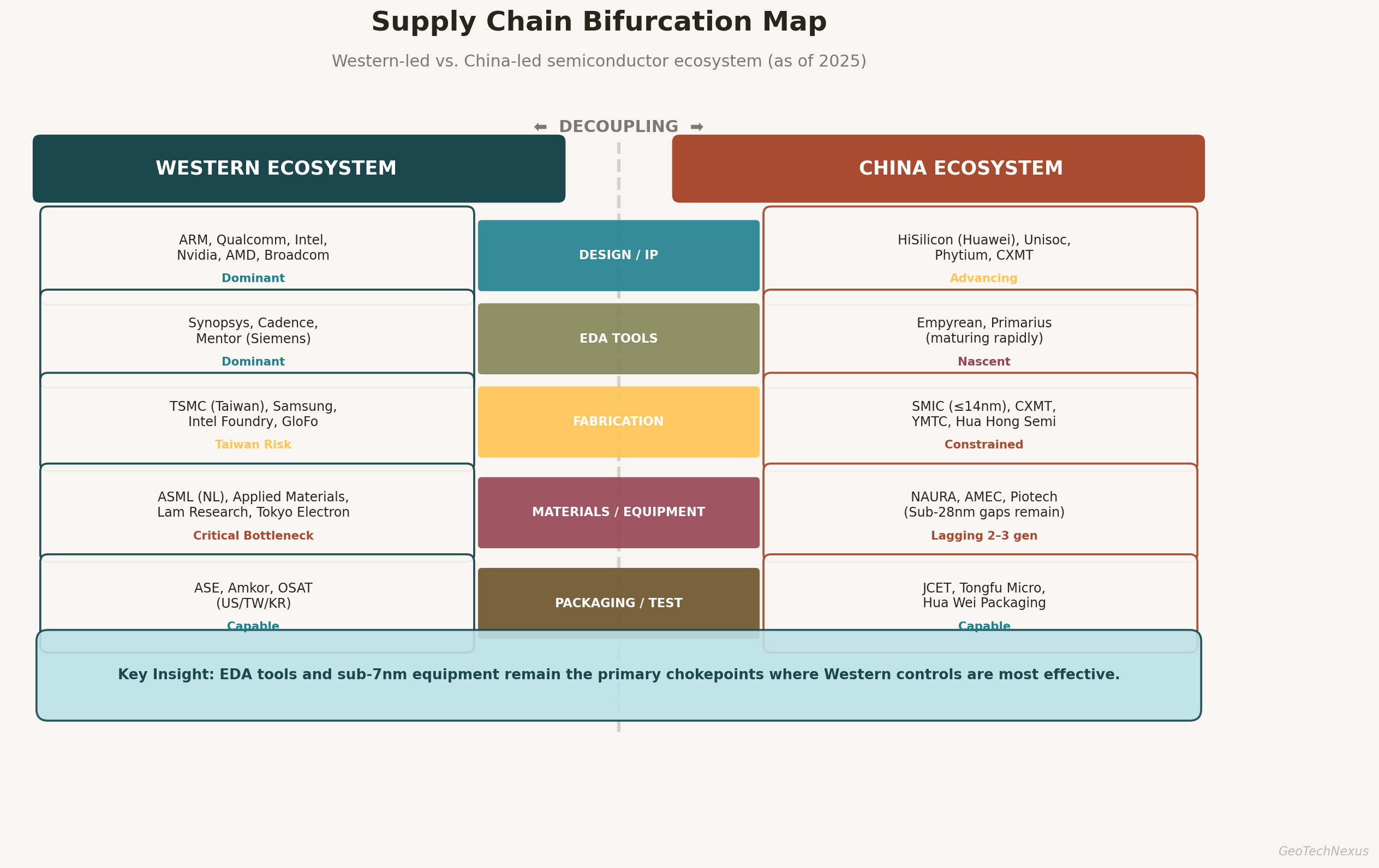
Policy shocks often hit second- and third-tier dependencies — advanced packaging, substrates, specialty gases, test handlers, IP blocks, or specific tools. Run a recurring supply-chain war game to map single points of failure, alternate qualification paths, and time-to-recover. Then fund mitigations (dual sourcing, strategic buffers, contractual priority) so resilience is operational, not aspirational.
Bottom line: pick 2–3 steps you can implement this quarter, assign owners, and track them like any other operational metric. The goal isn’t to predict the next rule change but to build a company that can keep shipping, supporting, and investing when the rules do change.
In practical terms, the winning chipmaker is less the one that predicts the next inventory correction but more the one that builds strategic degrees of freedom: multi-path roadmaps, multi-region supply options, and an explicit view of which revenues are most exposed to policy turbulence.
Bolaji Ojo is principal analyst at Geotechnexus. Contact him at bojo@geotechnexus.com.