Abstract: What began as trade friction is now a contest over who controls the technology stack.
The U.S.–China technology conflict did not begin with a single sanction or export-control rule. It emerged gradually through tariffs, entity-list designations, chip controls, mineral restrictions, and retaliatory measures that now shape the structure of the global technology economy. What began as trade friction has become a durable contest over who controls the most strategic layers of the technology stack.
The following is a bit of the history of recent actions taken by both countries over the last 10 years.
| Date | Action | Analytical note |
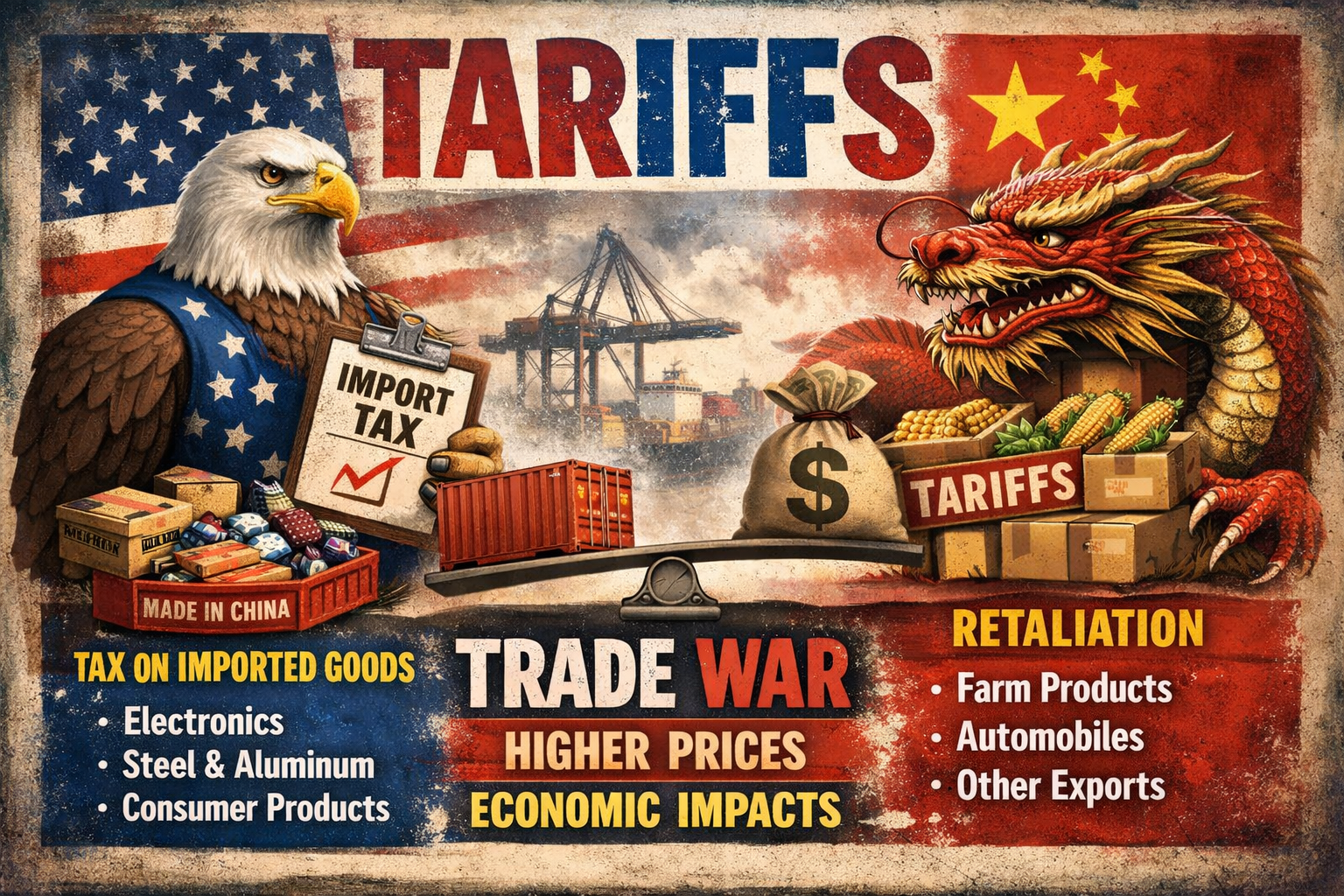
| 2016–2018 | The United States escalated Section 301 trade actions against China, and China retaliated with tariffs on U.S. goods. | This was the transition from trade tension to structured economic statecraft, with technology supply chains increasingly pulled into the confrontation. |
| 2018 | China imposed retaliatory tariffs on U.S. goods. | The retaliation signaled that the dispute would not remain confined to tariffs; it would spill into industrial and technology policy. |
| May 2019 | The United States added Huawei and related affiliates to the Entity List. | Huawei became the emblematic case of a global technology firm that turned into a geopolitical target, exposing how quickly revenue could become politically contingent. |
| 2019–2020 | Washington expanded restrictions on Chinese telecom firms, including Huawei and ZTE, and tightened procurement bans. | Telecom was redefined as national-security infrastructure, not merely a commercial network business. |
| 2020 | The United States further tightened Huawei-related restrictions, including limits on access to U.S. technologies. | The policy shifted from selective pressure to systemic disruption, especially in chips, software, and equipment access. |
| August 2022 | The United States restricted exports of EDA software to China. | This moved the control point upstream into chip design, not just production, showing that techno-statecraft targets the whole stack. |
| October 2022 | The United States imposed sweeping export controls on advanced computing chips and semiconductor manufacturing equipment. | This was the most consequential U.S. move in the semiconductor contest, directly constraining China’s access to leading-edge computing and fabrication capability. |
| 2022–2024 | The United States repeatedly expanded semiconductor and advanced-computing controls. | The controls became structural, turning China-related sales for many firms into politically exposed revenue rather than ordinary market demand. |
| July 2023 | China imposed export controls on gallium and germanium. | Beijing answered U.S. chip controls by targeting upstream materials essential to semiconductors, radar, and defense systems. |
| 2023 | China sanctioned U.S. defense-related firms linked to Taiwan arms sales and military cooperation. | The retaliation expanded beyond minerals into defense-tech and dual-use supply chains, widening the scope of economic confrontation. |
| 2023 | The United States added Chinese firms in AI, quantum computing, supercomputing, and cloud infrastructure to the Entity List. | Washington’s technology restrictions increasingly covered the computation layer itself, not only the hardware feeding it. |
| December 2024 | China expanded bans on exports of gallium, germanium, antimony, and superhard materials to the United States. | This deepened China’s leverage over defense manufacturing, precision tooling, and advanced electronics inputs. |
| December 2024 | China tightened dual-use export restrictions for military users and military end use. | The distinction between commercial and strategic trade became even narrower, especially for advanced materials and components. |
| 2024–2025 | The United States introduced additional semiconductor restrictions and new entity designations. | The policy direction remained consistent: preserve Western control over frontier chips and slow Chinese substitution. |
| March–April 2025 | China added U.S. firms to the Unreliable Entity List. | Beijing’s countermeasures became more explicit and recurring, reinforcing the two-way nature of techno-statecraft. |
| April 2025 | China added 11 U.S. companies to the Unreliable Entity List. | The move showed that retaliation is now part of the operating environment for U.S. firms with China exposure. |
| April 2025 | China announced new rare earth export controls. | Rare earths gave Beijing leverage over magnets, EVs, semiconductors, and defense supply chains, extending pressure well beyond chips alone. |
| September–October 2025 | China expanded rare earth and magnet restrictions, with closer scrutiny of semiconductor-related use. | The contest widened again, showing how materials policy now directly shapes chip production and strategic manufacturing. |
The last decade shows a shift from open trade rivalry to reciprocal techno-statecraft: Washington focuses on chips, tools, AI, and advanced computing, while Beijing leans on critical minerals, rare earths, and targeted retaliation. For companies, the implication is clear: revenue tied to either market is no longer simply commercial; in many cases it is politically exposed revenue.
Over the last decade, Washington and Beijing have moved from trade retaliation to direct control over chips, materials, AI, telecoms, and advanced manufacturing. The result is a more fragmented technology order, where revenue, supply chains, and market access can be altered by policy as much as
The U.S.–China technology conflict has evolved from a trade dispute into a structured contest over strategic technologies and supply-chain chokepoints. Early tariff exchanges gave way to export controls, entity-list designations, rare-earth restrictions, and retaliatory measures that now shape the global tech economy.
The United States has focused on limiting China’s access to advanced semiconductors, chipmaking equipment, AI hardware, and design software. China has responded by tightening exports of critical minerals such as gallium, germanium, antimony, and rare earths, while also using its own unreliable-entity tools and dual-use restrictions against U.S. firms.
For global companies, the lesson is stark: market access is no longer purely commercial. In technology, especially semiconductors, a significant share of revenue is now politically exposed revenue—income that can be constrained or removed by government action on either side.
Bolaji Ojo is principal analyst and founder of GeoTechNexus. He can be reached at bojo@geotechnexus.com.